
How Many Watts Is a Dyson Cordless Vacuum? Power Explained
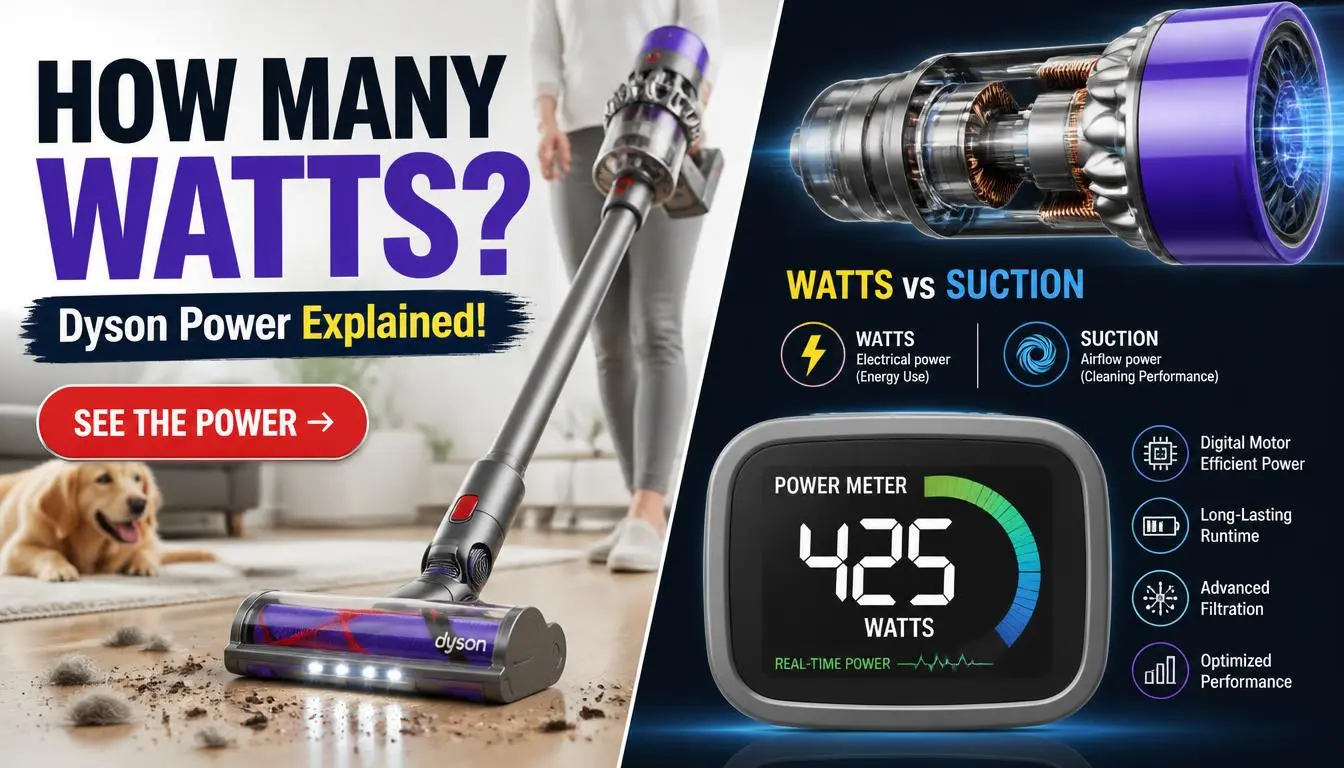
Asking how many watts is a dyson cordless vacuum cleaner often leads to confusing answers because the number changes based on your settings. You might see one figure for suction power and a completely different one for electrical draw from the wall. This distinction matters deeply when you are trying to gauge cleaning performance against battery life.
Manufacturer specifications indicate that modern Dyson models like the V15 Detect generate up to 230 Air Watts in Boost mode. Yet the actual electricity consumed from your outlet fluctuates significantly between Eco and Max settings. We need to break down exactly what these numbers mean for your daily cleaning routine.
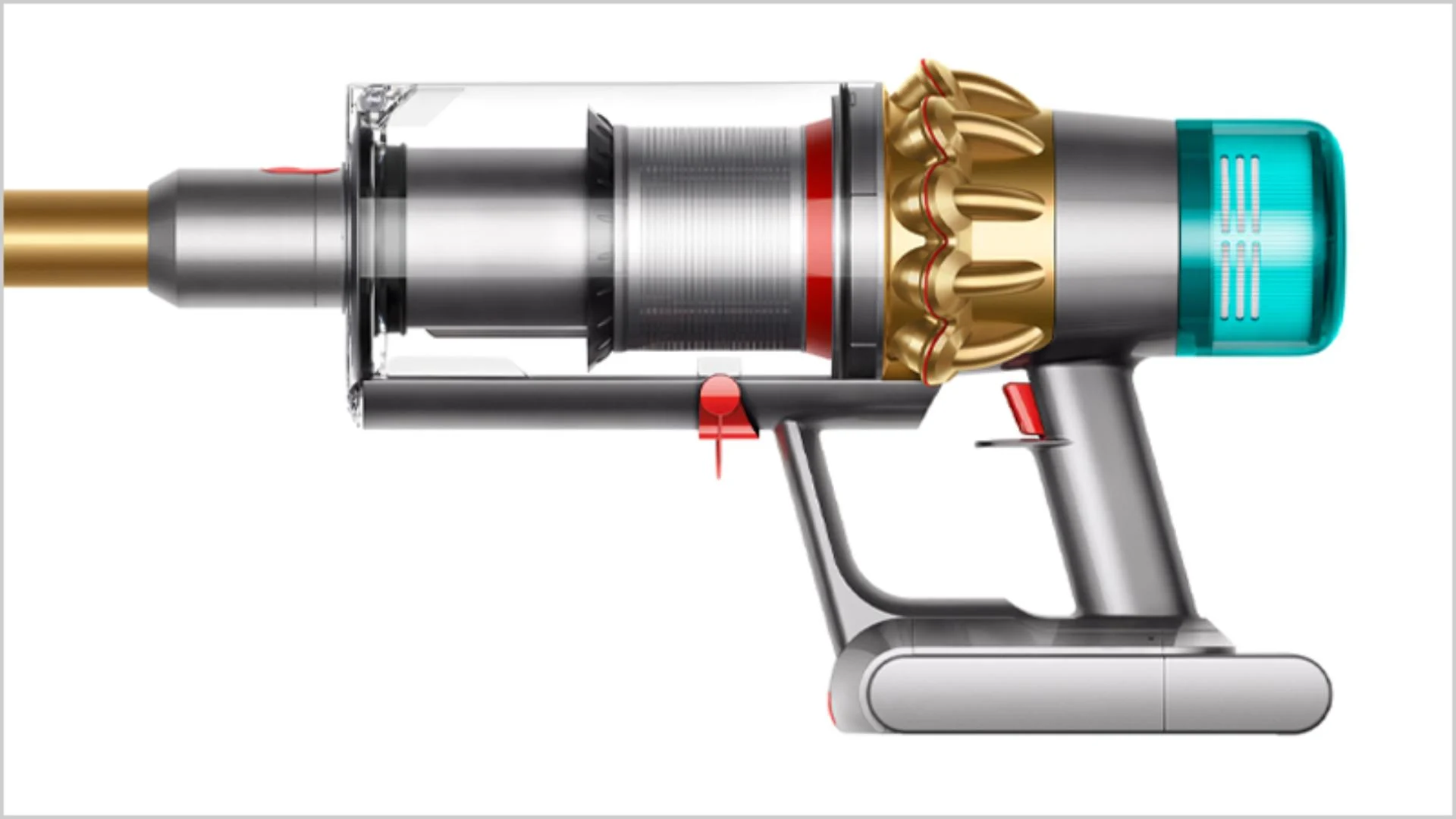
Image source: Bing (Web (fair-use with source credit))
Quick Answer
Dyson cordless vacuums do not have a single fixed wattage rating for all situations.
Electrical input power ranges from roughly 40 watts in Eco mode to over 600 watts in Boost.
Suction output is measured in Air Watts, spanning from 40 AW up to 230 AW depending on the model.
Runtime drops drastically as you increase the wattage setting on your device.
Always check your specific model manual for exact electrical and suction specifications.
The Short Answer: Why There Is No Single Watt Number
You cannot find one universal watt number for every Dyson stick vacuum because power is dynamic. These machines adjust energy consumption instantly based on the floor type and the mode you select. A Dyson V8 running in Eco mode pulls far less electricity than a V15 Detect in Boost mode.
The confusion usually stems from mixing up two different types of power measurements. One number tells you how much electricity the motor drinks from the battery. The other tells you how much suction force actually hits your carpet fibers.
We see this mix-up constantly in user forums and product reviews. People expect a static number like a traditional corded vacuum, such as a 1200-watt upright. But cordless technology works differently to preserve battery life while maintaining cleaning efficiency.
If you look at the label on your battery pack, you will see voltage and amp-hours. You won't see a simple "watts" sticker because the draw varies second by second. The motor controller ramps power up when it detects heavy debris and scales back on bare floors.
This dynamic adjustment is a feature, not a bug. It allows newer models to run longer on a single charge compared to older fixed-power units. Understanding this variability helps you choose the right tool for your home layout.
For instance, if you have mostly hardwood floors, you rarely need maximum wattage. But if you have thick carpets and pets, those high-watt bursts become essential. Your usage pattern dictates which wattage range matters most to you.
Air Watts vs. Electrical Watts: Understanding the Two Power Metrics
Most people get stuck on the wrong number because they don't know the difference between input and output. Electrical watts measure how much energy the vacuum pulls from the battery to spin the motor. Air watts measure the actual cleaning result at the floor head.
Think of it like a car engine. Electrical watts are the fuel going into the tank. Air watts are the horsepower reaching the wheels to move the vehicle forward.
Defining Electrical Input Watts
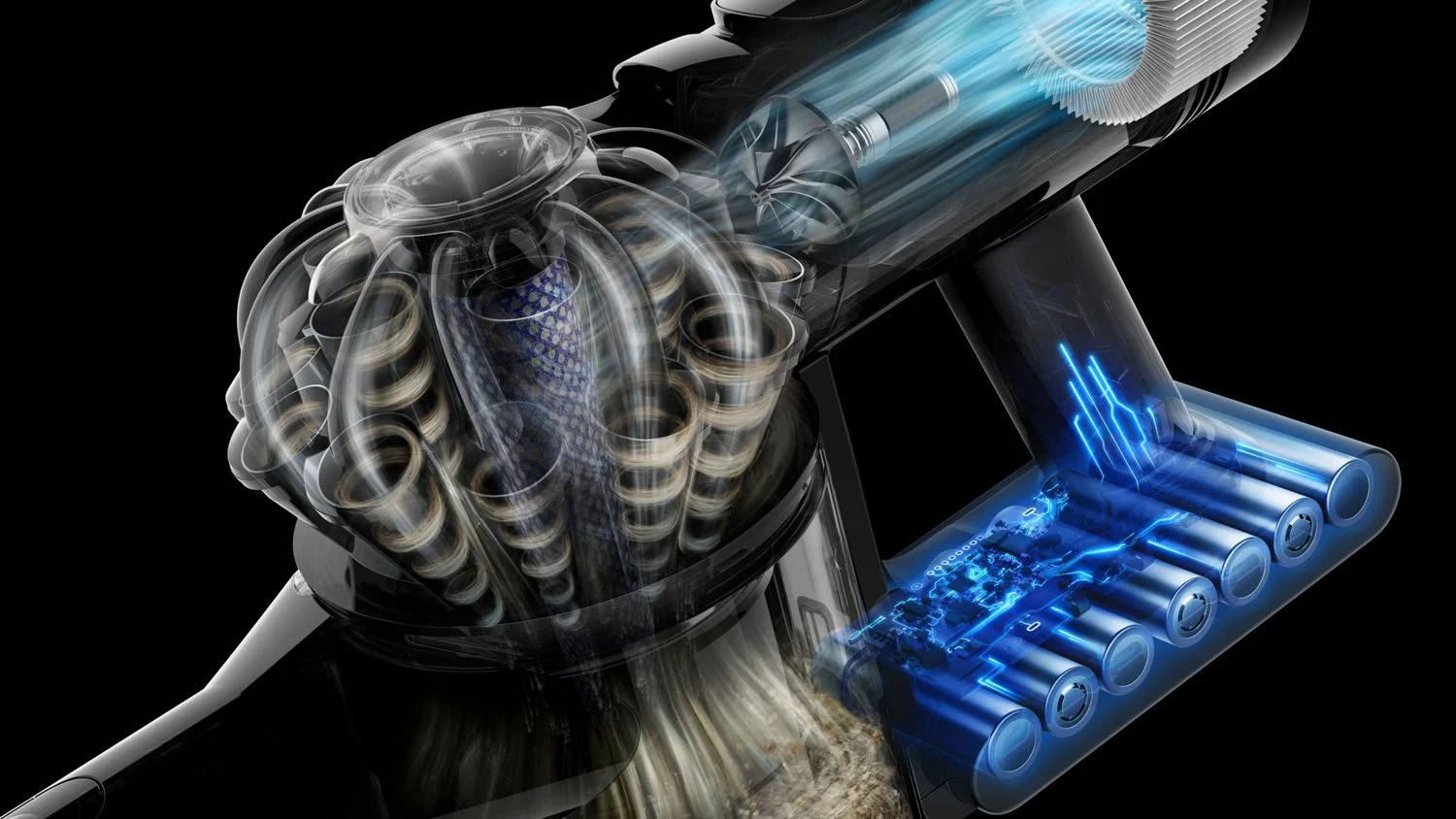
Electrical watts represent the raw energy consumption of the unit. This is the load placed on your lithium-ion battery cells. In Eco mode, a typical Dyson might draw only 30 to 50 electrical watts.
Switch to Boost mode, and that number can skyrocket past 600 watts momentarily. This huge spike drains the battery rapidly but provides maximum agitation for deep cleaning. The battery management system limits this draw to prevent overheating and cell damage.
High electrical draw generates heat. That is why running in Max mode feels warmer near the handle after a few minutes. It also explains why runtime plummets from 60 minutes to just 8 minutes when you flip that switch.
Defining Air Watts (AW)
Air watts are a standardized measurement of suction effectiveness. This metric combines airflow volume with vacuum pressure to give a true picture of cleaning ability. A higher Air Watt rating means better pickup of fine dust and heavy debris.
Dyson popularized this term to differentiate their cyclonic technology from competitors using Pascals or simple voltage claims. As of 2026, the top-tier V15 Detect offers around 230 Air Watts. Older models like the V6 sat closer to 100 Air Watts.
This number stays relatively consistent until the battery nears depletion. Unlike electrical draw, Air Watts describe the outcome you care about. They tell you if the vacuum will pull dirt out of your rug or just skim the surface.
| Metric | What It Measures | Typical Range (Dyson) | Why It Matters |
|---|---|---|---|
| Electrical Watts | Energy drawn from battery | 30W (Eco) to 650W+ (Boost) | Determines battery runtime and heat generation |
| Air Watts (AW) | Suction power at floor head | 40 AW to 230 AW | Determines cleaning performance on carpets/floors |
| Voltage | Electrical potential of battery | 21.6V to 36V | Indicates overall system power capacity |
Why the Distinction Confuses Buyers
Marketing materials often highlight the impressive Air Watt number while hiding the electrical cost. You might see "230 AW" in big bold letters on the box. But you won't see "drains battery in 9 minutes" written quite as large.
This leads to unrealistic expectations about runtime. Users assume high suction means long cleaning sessions. In reality, high suction eats energy fast.
If you are comparing brands, ensure you are comparing apples to apples. Some competitors list Pascal (Pa) ratings instead of Air Watts. Converting these requires specific formulas, but generally, higher numbers in either category suggest stronger suction.
Always check independent tests for real-world data. Manufacturer claims are taken under ideal laboratory conditions. Real homes with furniture and varied flooring present different challenges.
How Power Modes Dictate Actual Energy Consumption
Your finger on the trigger or mode button controls the entire power profile of the machine. Dyson vacuums typically offer three distinct settings: Eco, Auto/Medium, and Boost/Max. Each mode engages a different electrical curve.
In Eco mode, the motor spins at a lower RPM. This keeps electrical draw low, often under 50 watts. You get the longest possible runtime, sometimes up to an hour or more depending on the model.
This mode works well for hard floors and light dusting. It lacks the aggression needed for deep carpet cleaning. But for daily maintenance, it preserves battery health effectively.
The Auto Mode Intelligence
Auto mode uses sensors to adjust power automatically. A piezo sensor counts dust particles and measures air pressure drop. If the vacuum detects a thick rug or a pile of cereal, it spikes the wattage instantly.
Once the head moves back to a bare floor, power scales back down. This smart modulation saves energy without sacrificing cleaning quality. It removes the guesswork for the user.
However, constant surging in Auto mode can still drain the battery faster than steady Eco use. If your whole house is carpeted, Auto might behave almost like Boost mode. Hardwood-heavy homes see the biggest efficiency gains here.
The Cost of Boost Mode
Boost mode unlocks the full potential of the digital motor. Electrical consumption peaks here, often exceeding 600 watts. This delivers maximum Air Watts for stubborn messes or pet hair embedded in fibers.
The tradeoff is severe runtime reduction. Most Dyson models last only 8 to 10 minutes in this setting. That is barely enough time to do a single room or a set of stairs.
Use Boost strategically. Do not leave it on for general vacuuming. Reserve it for spot cleaning high-traffic areas or upholstery where deep extraction is vital.
| Mode | Estimated Electrical Draw | Estimated Runtime (V15) | Best Use Case |
|---|---|---|---|
| Eco | ~30-50 Watts | 60+ minutes | Hard floors, light dust, large areas |
| Auto | Variable (50-300 Watts) | 40-50 minutes | Mixed flooring, unknown debris levels |
| Boost | 600+ Watts | 8-10 minutes | Deep carpets, pet hair, heavy spills |
Impact on Battery Longevity
Frequent use of high-wattage modes stresses the battery cells more than gentle Eco cycling. Heat is the enemy of lithium-ion chemistry. Running in Boost repeatedly without cooling breaks can degrade capacity over time.
If you find yourself needing Boost for every session, your filtration might be clogged. Or you might need a model with higher baseline power. Relying on Max mode daily suggests a mismatch between your tool and your floor type.
Balancing your mode usage extends the life of your investment. It also ensures the vacuum is ready when you truly need that extra punch. Smart habits pay off in years of service.
Breakdown by Model: Dyson V8, V10, V11, V12, and V15 Specs
Not all Dyson cordless vacuums deliver the same wattage. The lineup has evolved significantly over the years. Newer motors are more efficient and powerful than their predecessors.
The V8 remains a popular entry point. It generates about 115 Air Watts. Its electrical draw is modest, making it reliable for smaller apartments.
But it lacks the sensor tech of newer units.
Moving up to the V10 and V11, we see a jump to roughly 150 Air Watts. The V11 introduced the LCD screen that shows real-time power usage. This visual feedback helps users understand their consumption habits immediately.
The Hyperdymium Motor Leap
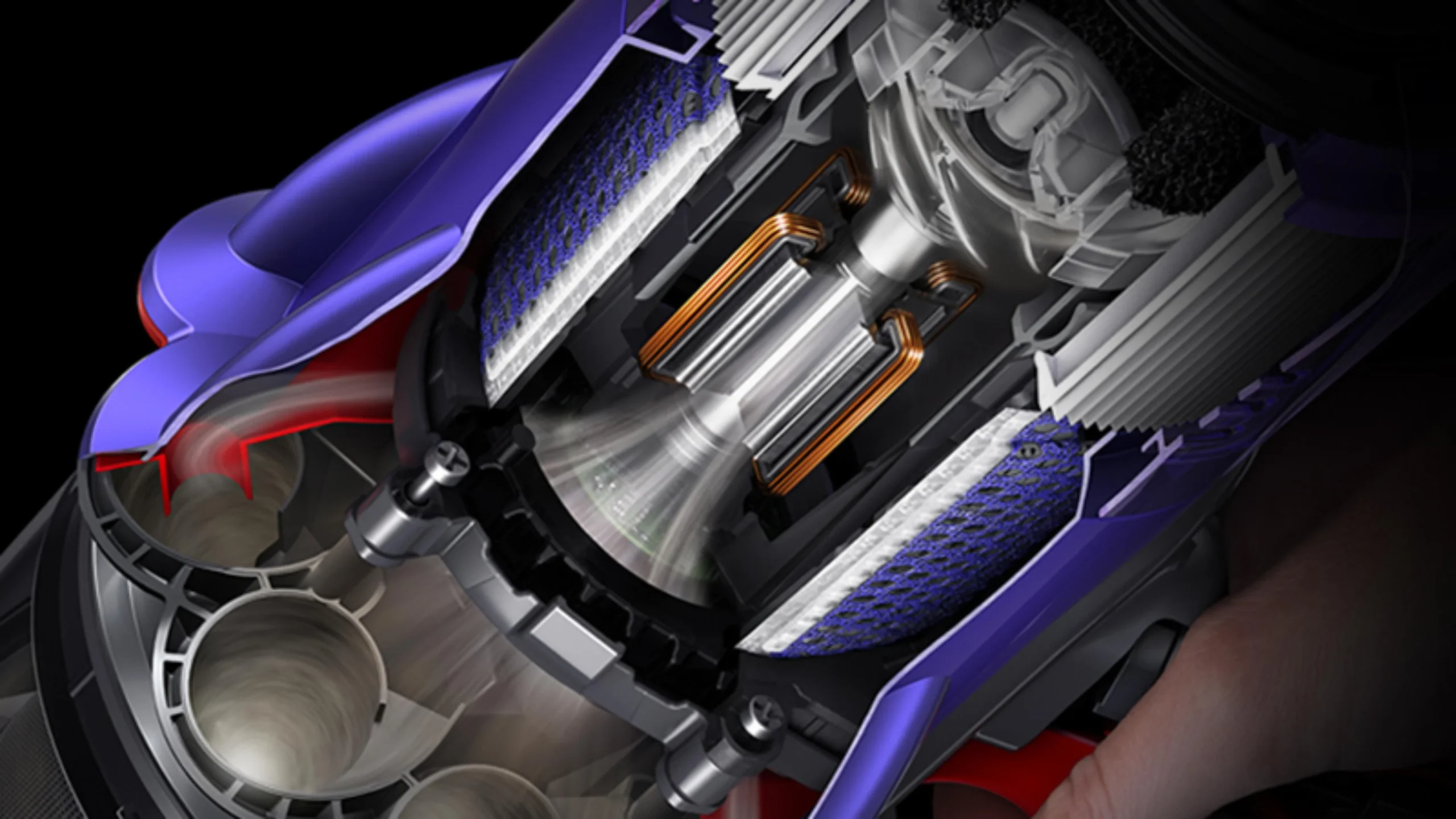
The V12 and V15 models feature the Hyperdymium motor. This innovation spins at up to 125,000 rpm. It pushes Air Watts to 230 in the V15 Detect.
These newer motors are lighter yet more potent. They allow for higher suction without proportionally increasing weight. The efficiency gain means better runtime even at higher power levels compared to older generations.
The V12 Detect Slim offers slightly less power than the V15 to reduce weight further. It targets users who prioritize maneuverability over raw suction stats. Knowing these nuances helps you pick the right tier.
Specific Model Data Points
Here is how the major models stack up in terms of suction power and typical electrical behavior. Note that electrical watts vary by mode, so we focus on the peak capability and Air Watt ratings.
- Dyson V8 Absolute: 115 Air Watts. Ideal for basic needs. Electrical draw peaks around 400W in Max.
- Dyson V10 Total Clean: 151 Air Watts. Significant step up in airflow. Good for medium homes.
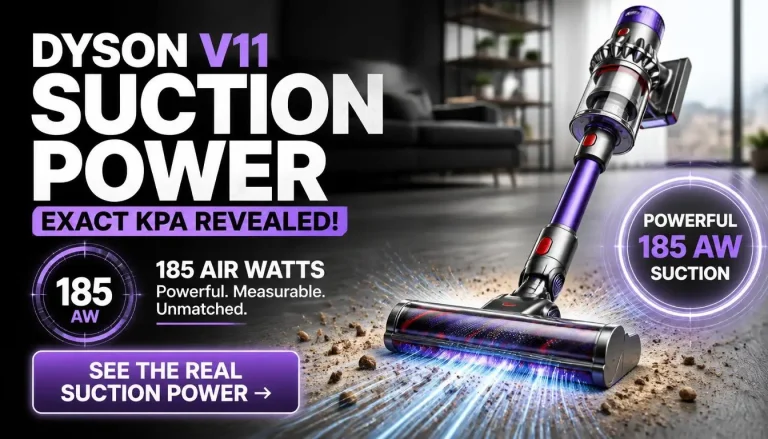
- Dyson V11 Torque Drive: 185 Air Watts. Adds intelligent auto-adjustment. Peak electrical draw exceeds 500W.
- Dyson V12 Detect Slim: 150 Air Watts. Optimized for lightweight handling. Uses laser illumination for dust detection.
- Dyson V15 Detect: 230 Air Watts. The current powerhouse. Features advanced particle counting and highest electrical throughput.
If you are looking for the most powerful cordless vacuum cleaner in the entire market, the V15 usually tops the lists. But for many, the V11 offers a sweeter spot of power versus price.
Evolution of Battery Systems
Older models used 21.6V battery packs. Newer flagship units have moved to 25.2V or even higher nominal voltages. This increase supports the higher wattage demands of the Hyperdymium motors.
Higher voltage allows for more power delivery without necessarily increasing amperage flow, which reduces heat in the wiring. It is a subtle engineering shift that enables the massive suction gains we see today.
When replacing batteries, match the voltage exactly. Using an older lower-voltage pack in a newer high-wattage head will result in poor performance. The system simply cannot deliver the required energy.
Check our guide on best cordless electric brooms if you need something lighter for quick sweeps instead of deep cleaning. Sometimes less wattage is actually more convenient for daily touch-ups.
The Battery Factor: Voltage, Amp-Hours, and Runtime Trade-offs
The battery is the heart of the cordless equation. It dictates how long you can sustain those high wattage outputs. Understanding its specs reveals why runtime varies so wildly.
Voltage determines the potential power available. Amp-hours (Ah) determine the fuel tank size. Multiply them together, and you get Watt-hours (Wh), the total energy capacity.
A typical Dyson battery might be 25.2 volts with 3.6 amp-hours. That equals roughly 90 watt-hours of total stored energy. Simple math tells us that drawing 600 watts will deplete this in about 9 minutes.

The Runtime Reality Check
Manufacturers often advertise "up to 60 minutes" of runtime. This claim always assumes Eco mode on hard floors. It is technically accurate but practically misleading for many users.
If you run in Auto mode on mixed flooring, expect 30 to 40 minutes. If you hold the trigger in Boost, you get less than 10. Plan your cleaning sessions accordingly.
Large homes require strategy. You might need to clean in stages or invest in a spare battery. Some newer docks allow for swappable packs to extend reach.
Voltage Sag and Performance Drop
As the battery discharges, voltage sags slightly. The motor controller compensates to keep suction consistent until the very end. This is called "fade-free" power.
However, once the cells hit a critical low threshold, performance cuts off sharply. There is no gradual fade like old NiCad batteries. The machine just stops to protect the cells from deep discharge damage.
Cold temperatures also affect lithium-ion performance. Using your vacuum in an unheated garage during winter may reduce effective runtime. Keep batteries at room temperature for optimal wattage delivery.
Matching Battery to Head Requirements
High-torque cleaner heads demand more power than soft roller heads. The motorized brush bar adds mechanical load to the system. This increases overall electrical draw even if suction settings remain the same.
If you swap to a non-motorized tool, like a crevice nozzle, the load drops. You can eke out extra minutes of runtime by using simpler attachments for specific tasks.
Understanding this relationship helps optimize your workflow. Use the heavy motorized head for carpets. Switch to lighter tools for drapes or cars to save juice.
For those interested in outdoor power tools, the principles of battery voltage and amp-hours apply similarly to best cordless electric weed wackers. High-drain tools always demand careful energy management.
Real-World Performance: Eco, Auto, and Boost Mode Scenarios
Numbers on a spec sheet tell only half the story. Real homes present unique challenges that shift how you use power modes daily. Your floor type dictates which setting delivers the best results without wasting energy.
Hardwood floors require very little suction to clean effectively. Dust and debris sit on the surface rather than embedding deep into fibers. Running Boost mode here is overkill and drains your battery unnecessarily.
Eco mode handles hard floors perfectly. It picks up crumbs and dust bunnies with ease. You gain maximum runtime while keeping noise levels low.
Tackling Mixed Flooring Challenges
Most houses combine hardwood, tile, and area rugs. This mix makes Auto mode the smartest choice for whole-home cleaning. The vacuum senses the transition and adjusts wattage instantly.
You hear the motor pitch change as you move from tile to carpet. That is the sensor detecting increased airflow resistance. The system ramps up power to agitate the rug fibers.
This automatic adjustment prevents you from manually flipping switches every few steps. It keeps the workflow smooth and efficient. You focus on cleaning instead of managing settings.
Deep Cleaning Carpets and Pet Hair
Thick carpets trap dirt deep within the pile. Surface suction alone cannot pull it out effectively. You need high agitation and strong airflow to lift embedded grime.
Boost mode becomes essential here. It spins the brush bar at maximum speed. The high wattage creates the pressure needed to extract pet hair and sand.
Limit this mode to specific high-traffic zones. Do not run it across the entire house unless necessary. Your battery will die before you finish the second room.
Stairs and Upholstery Work
Cleaning stairs requires a different approach due to gravity and angles. Holding the vacuum overhead adds physical strain. Heavy models feel heavier in Boost mode due to motor torque.
Switch to a lighter handheld configuration if your model allows it. Use Medium or Auto mode for fabric upholstery. Boost can sometimes scatter loose debris on smooth stair treads if not careful.
Short bursts of high power work best for corners. Long continuous runs waste energy on vertical surfaces. Targeted cleaning saves battery for the main floors.
| Scenario | Recommended Mode | Why It Works | Battery Impact |
|---|---|---|---|
| Hardwood/Tile | Eco | Sufficient suction for surface dust | Minimal drain, max runtime |
| Area Rugs | Auto | Adjusts to fiber density automatically | Moderate drain, balanced efficiency |
| Wall-to-Wall Carpet | Boost (Spot) / Auto (General) | High power needed for deep extraction | High drain, short duration |
| Stairs/Curtains | Medium/Auto | Balances weight and suction needs | Low to moderate drain |
If you have mostly carpeted rooms, check our analysis of the best cordless carpet vacuums to see if a dedicated upright might suit your needs better. Sometimes a specialized tool beats a generalist stick vacuum for heavy-duty tasks.
Cordless vs. Corded: Comparing True Cleaning Power
People often assume corded vacuums are always more powerful than cordless ones. This was true ten years ago but no longer holds up in 2026. Top-tier cordless sticks now rival mid-range corded uprights in suction metrics.
A standard corded vacuum might draw 1200 electrical watts from the wall. However, much of that energy loses to heat and motor inefficiency. Actual suction output often matches a high-end Dyson running in Boost.
The real difference lies in consistency and duration. Corded units provide unlimited runtime at full power. Cordless vacuums must manage energy reserves carefully.
The Efficiency Gap
Cordless motors have become incredibly efficient. Digital cyclonic technology extracts more useful work per watt of electricity. A 600-watt cordless motor can outperform an old 1000-watt corded one.
This efficiency allows smaller batteries to deliver strong cleaning results. It also reduces heat buildup during operation. You get more cleaning power per unit of energy stored.
Corded motors often rely on brute force. They spin heavy armatures that consume vast amounts of electricity. Much of that power never translates to suction at the floor head.
Runtime and Convenience Trade-offs
Corded vacuums win on endless runtime. You can clean for hours without stopping. This matters for large commercial spaces or massive estates.
Cordless vacuums trade runtime for maneuverability. No cord means no dragging, tangling, or outlet hunting. You clean faster because you move freely.
For most average-sized homes, 40 minutes of cordless runtime suffices. You finish the job before the battery dies. The convenience factor outweighs the raw power advantage of cords.
Suction Fade Comparison
Older cordless models suffered from suction fade as batteries drained. Power dropped steadily throughout the session. Cleaning performance degraded noticeably after 15 minutes.
Modern Dyson electronics prevent this fade completely. They maintain peak Air Watts until the battery hits a critical low point. Then they shut off abruptly rather than weakening gradually.
Corded vacuums maintain constant power as long as they are plugged in. There is no drop-off unless the bag clogs or the filter dirty. Both technologies now offer consistent performance during their active window.
If you need unlimited power for heavy-duty workshops, a corded unit remains king. But for daily living spaces, the most powerful cordless stick vacuum options provide ample strength. The gap has closed significantly in recent years.
Who Actually Needs Max Power? Matching Watts to Your Home
Not every household requires the highest wattage available. Buying a 230 AW monster when you live in a studio apartment is wasteful. Match the machine to your specific environment and lifestyle.
Small apartments with mostly hard floors need less power. Dust does not embed deeply in tile or wood. A lower-wattage model like the V8 or V12 Slim works perfectly here.
You save money and reduce weight without sacrificing cleanliness. Lighter vacuums encourage more frequent cleaning too. Ease of use drives better habits.
The Pet Owner Requirement
Pets change the equation dramatically. Fur mats into carpets and clogs filters quickly. You need high suction to pull hair from deep within rug piles.
Boost mode becomes a daily necessity for pet owners. You also need strong airflow to keep the bin clear of clumps. Lower-wattage models struggle with heavy shedding seasons.
Invest in a high-Air Watt model if you have dogs or cats. The extra power pays off in reduced grooming time and cleaner floors. It prevents hair from accumulating under furniture.
Allergy Sufferer Considerations
Allergy sufferers need more than just suction. They need superior filtration to trap microscopic particles. High wattage helps force air through dense HEPA filters effectively.
Without strong airflow, fine dust bypasses the filter and returns to the room. Powerful motors ensure air passes cleanly through the sealed system. This captures pollen and dander reliably.
Look for models with whole-machine HEPA certification. Pair this with sufficient Air Watts to maintain airflow resistance. Clean air output matters more than raw pickup speed here.
Large Homes and Multi-Level Living
Large homes demand efficient cleaning workflows. Dragging a corded vacuum upstairs is tedious. Cordless models shine in multi-story environments.
However, battery capacity becomes the limiting factor. One charge might not cover 3000 square feet. You may need to recharge midway or own two batteries.
High-wattage models clean faster per pass. You cover ground quicker even if runtime is shorter. Speed compensates for limited battery life in sprawling layouts.
| User Profile | Recommended Power Level | Key Reason | Ideal Model Tier |
|---|---|---|---|
| Studio Apartment | Low to Medium | Hard floors, minimal debris | Entry-level (V8, Slim) |
| Pet Owner | High | Embedded fur, heavy shedding | Mid to High (V11, V15) |
| Allergy Sufferer | High + HEPA | Filtration efficiency, fine dust | High (V15, Outsize) |
| Large Home | Medium to High | Speed of cleaning, coverage | Mid to High (V12, V15) |
| Car Detailer | High (Handheld) | Upholstery extraction, tight spaces | Versatile Stick/Handheld |
If you primarily clean vehicles, consider a dedicated best cordless car vacuum for portability. Sometimes a specialized handheld beats a full-size stick for interior detailing work.
Common Mistakes When Interpreting Dyson Power Ratings
Buyers frequently misread spec sheets and end up disappointed. They see a big number and assume it guarantees perfect cleaning forever. Reality involves more variables than a single watt rating.
One major error is ignoring the mode context. A "60-minute runtime" claim applies only to Eco mode. Using Boost cuts that time by eighty percent instantly.
Always read the fine print on battery life claims. Manufacturers test under ideal conditions with minimal load. Your home environment will differ from their lab settings.
Confusing Voltage with Suction
Some shoppers think higher voltage equals better cleaning. While voltage supports power, it does not measure suction directly. A 36V system with poor aerodynamics sucks less than a 25V system with great design.
Focus on Air Watts for performance comparison. Voltage tells you about the battery architecture, not the cleaning result. It is a supporting stat, not the headline figure.
Newer low-voltage motors can outperform older high-voltage ones. Engineering efficiency matters more than raw electrical potential. Look at the complete spec profile before deciding.
Overlooking Filter Maintenance Impact
A clogged filter kills suction regardless of motor wattage. Users blame the machine when the foam block is dirty. Restricted airflow mimics low-power symptoms perfectly.
Wash filters regularly according to the manual. Let them dry completely before reinstalling. Wet filters damage motors and block air passage entirely.
Many "low power" complaints stem from neglected maintenance. Restore airflow before assuming the motor is failing. Simple cleaning often restores full performance instantly.
Ignoring Bin Capacity Limits
Full bins restrict airflow significantly. Cyclonic separation fails when the collection chamber is packed. Suction drops sharply once the bin reaches the max line.
Empty the bin before every session for best results. Do not wait until it overflows. A half-full bin maintains optimal cyclone velocity better than a stuffed one.
Small bins on compact models fill faster with pet hair. You might empty them three times per room. This interrupts workflow but preserves suction consistency.
| Mistake | Consequence | Solution |
|---|---|---|
| Ignoring Mode Context | Unexpectedly short runtime | Check specs for Eco vs Boost duration |
| Focusing Only on Voltage | Poor performance selection | Prioritize Air Watts (AW) ratings |
| Skipping Filter Washes | Reduced suction, overheating | Rinse filters monthly, dry 24 hours |
| Overfilling the Bin | Loss of cyclonic separation | Empty bin when reaching "Max" line |
| Using Wrong Head | Inefficient cleaning, wasted power | Match brush bar to floor type |
Misunderstanding these factors leads to unnecessary upgrades. You might buy a stronger vacuum when simple maintenance would fix the issue. Knowledge saves money and frustration.
Pro Tips for Extending Battery Life Without Sacrificing Suction
Battery health determines the long-term value of your vacuum. Lithium-ion cells degrade over time if mistreated. Smart usage habits extend their lifespan significantly.
Avoid leaving the vacuum on the charger indefinitely. Once full, unplug it to prevent trickle charging stress. Modern docks manage this well, but disconnecting is safer.
Store the unit in a cool, dry place. Heat accelerates chemical breakdown inside battery cells. Never leave it in a hot car or direct sunlight.
Strategic Mode Switching
Start each room in Auto mode. Assess the dirt level visually before engaging Boost. Often, Auto provides enough power for general maintenance.
Reserve Boost for visible messes only. Release the trigger immediately after clearing the spot. Short bursts minimize heat generation and energy drain.
This habit stretches your runtime per charge. It also reduces thermal cycling stress on the pack. Cooler batteries last longer over years of use.
Proper Storage Practices
Do not store the battery fully depleted. Deep discharge damages cell chemistry permanently. If unused for weeks, charge it to fifty percent first.
Long-term storage at zero percent risks bricking the pack. The management system may refuse to recharge it later. Keep a partial charge for inactive periods.
Check the charge level monthly during storage. Top it up if it drops too low. Active monitoring prevents accidental deep discharge events.
Cleaning for Efficiency
Keep the brush bar free of hair tangles. Wrapped hair increases mechanical load on the motor. The battery works harder to spin a tangled roller.
Cut away debris regularly with scissors or a cleaning tool. A clean brush bar spins freely with less resistance. This lowers electrical draw and extends runtime.
Inspect the airway path for blockages too. Clogged tubes force the motor to strain against vacuum pressure. Clear pathways ensure efficient energy use.
For more on maintaining outdoor battery tools, our guide on best cordless electric chainsaws offers similar battery care advice. The principles of lithium-ion maintenance apply across all high-drain devices.
Safety and Compliance: Handling High-Drain Lithium-Ion Packs
High-wattage cordless vacuums rely on dense lithium-ion battery packs that demand respect. These cells store significant energy in a small space. Mishandling them can lead to thermal runaway or fire hazards.
Always use the official charger provided by the manufacturer. Third-party chargers often lack precise voltage regulation. This mismatch can overheat cells during the charging cycle.
Inspect your battery pack regularly for physical damage. Dents, swelling, or cracked casings are immediate red flags. Stop using the unit if you see any of these signs.
Thermal Runaway Risks
Thermal runaway occurs when a cell overheats and triggers a chain reaction. This is rare but serious in high-drain devices like vacuums. It usually happens after physical impact or exposure to extreme heat.
Never leave your vacuum charging unattended overnight if the battery is old. Aging cells have higher internal resistance and generate more heat. Monitor the temperature of the pack during the first hour of charging.
If the unit feels excessively hot to the touch, unplug it immediately. Place it on a non-flammable surface like concrete or tile. Allow it to cool completely before investigating further.
Proper Disposal Protocols
Do not throw lithium batteries in regular household trash. They pose a fire risk in garbage trucks and landfills. Most regions have strict laws regarding their disposal.
Take old packs to designated e-waste recycling centers. Many electronics retailers offer drop-off bins for used batteries. This ensures safe handling and material recovery.
Tape the terminals of removed batteries before storage or transport. This prevents accidental short circuits if metal objects touch the contacts. Simple precautions prevent dangerous sparks.
Certification Standards to Look For
Reputable manufacturers adhere to strict safety standards like UL 1642 or IEC 62133. These certifications verify the battery management system works correctly. They ensure protection against overcharging and short circuits.
Check the label on your battery pack for these marks. Absence of certification logos suggests counterfeit or substandard components. Avoid uncertified replacements at all costs.
Official Dyson batteries include built-in microprocessors to monitor cell health. These chips communicate with the vacuum to prevent unsafe operation. Counterfeit packs often lack this critical communication layer.
For general safety tips on power tools, our guide on best cordless drills for women covers similar battery handling best practices. Safe usage extends the life of all your cordless gear.
Maintenance Steps to Keep Your Vacuum Running at Peak Watts
Dirty filters and clogged pathways mimic low-power symptoms perfectly. Regular maintenance restores lost suction without buying a new machine. A clean vacuum runs cooler and more efficiently.
Start by checking the pre-motor filter monthly. This foam block catches large debris before it hits the motor. Rinse it under cold water until the runoff runs clear.
Let the filter dry for at least 24 hours before reinstalling. Never put a damp filter back into the unit. Moisture can damage the motor electronics and cause mold growth.
Clearing Airway Blockages
Blockages often occur in the wand, hose, or cleaner head neck. Hair wraps around brush bars and restricts airflow significantly. This forces the motor to work harder for less result.
Use a long flexible tool to push out clogs from both ends. Check the U-bend connection points where debris commonly gets stuck. Remove any tangled hair from the brush bar carefully.
Listen for changes in motor pitch while cleaning. A higher-pitched whine often indicates a blockage restricting air intake. Address it immediately to prevent motor strain.
Bin Emptying Best Practices
Empty the bin when it reaches the "Max" line, not after. Overfilling disrupts the cyclonic separation process. Dust bypasses the bin and clogs the filter rapidly.
Tap the bin gently against the side of a trash can to dislodge fine dust. Do not wash the bin with soap unless necessary. Residual soap suds can interfere with cyclone action.
Inspect the mesh screen inside the bin for tears or holes. Damaged screens let debris enter the motor housing. Replace broken parts immediately to avoid catastrophic failure.
Brush Bar Care
The motorized brush bar takes the most mechanical abuse. Cut away wrapped hair and fibers with scissors or a seam ripper. Do not pull hard enough to bend the bristles.
Check the end caps for wear and tear. Worn bearings cause the bar to wobble and lose efficiency. Lubricate moving parts only if the manual specifically advises it.
A free-spinning brush bar reduces electrical load on the battery. This simple step extends runtime and preserves motor life. Consistent care keeps performance levels high for years.
| Maintenance Task | Frequency | Impact on Performance |
|---|---|---|
| Rinse Pre-Motor Filter | Every 1-2 Months | Restores airflow, protects motor |
| Clean Brush Bar | Every 2 Weeks | Prevents tangles, maintains agitation |
| Empty Bin | Every Use | Ensures consistent cyclonic separation |
| Check Wand/Hose | Monthly | Removes hidden blockages, reduces noise |
| Wipe Sensors | Every 3 Months | Keeps Auto mode accuracy high |
Neglecting these steps leads to premature battery drain. You might think your battery is dying when it is just working too hard. Cleanliness equals power in cordless vacuums.
Cost vs. Performance: Is Higher Wattage Worth the Upgrade?
Upgrading to a higher-wattage model costs significantly more upfront. The price jump from a V8 to a V15 can be substantial. You need to decide if the extra power justifies the expense.
Higher wattage delivers better deep-cleaning results on carpets. It extracts more dirt and allergens in fewer passes. This efficiency saves time during your weekly routine.
However, for hard-floor-only homes, the benefit diminishes quickly. Eco mode on a cheaper model cleans tile just as well. Paying for Boost power you never use is wasteful.
Long-Term Value Analysis
Expensive models often include better battery technology and build quality. They may last longer before needing replacement parts. The initial cost spreads out over more years of service.
Cheaper units might need battery replacements sooner. Their motors may not handle heavy loads as gracefully over time. Consider the total cost of ownership, not just the sticker price.
Resale value also favors flagship models. High-end Dysons hold their value better on secondary markets. You recoup more money if you decide to upgrade later.
When to Stick with Lower Power
If you live in a small apartment, a mid-range model suffices. You do not need 230 Air Watts to clean 800 square feet. A lighter, less powerful unit reduces arm fatigue.
Students or renters often benefit from budget-friendly options. They provide reliable cleaning without breaking the bank. Portability matters more than raw suction in tight spaces.
Use cases involving quick spot cleaning favor simplicity. Grabbing a lightweight stick vacuum encourages frequent use. Heavy high-wattage machines might stay in the closet due to bulk.
The Sweet Spot for Most Users
The V11 or V12 tier often represents the best balance. They offer plenty of power for mixed flooring without the premium price tag of the V15. Auto mode handles most situations effectively.
You get advanced features like LCD screens and laser heads without maxing out the budget. These models cover 90% of household cleaning needs comfortably. Only extreme cases require the absolute top tier.
Evaluate your specific floor types before spending more. Carpet-heavy homes justify the upgrade. Hardwood-dominated spaces do not.
| Feature | Budget Model (e.g., V8) | Mid-Range (e.g., V11/V12) | Flagship (e.g., V15) |
|---|---|---|---|
| Suction Power | Adequate for hard floors | Strong for mixed floors | Maximum for deep carpets |
| Battery Tech | Older generation | Improved longevity | Latest high-density cells |
| Smart Features | Basic trigger | Auto-adjust, LCD | Particle counting, Laser |
| Price Point | Low | Moderate | High |
| Best For | Small flats, hard floors | Average family homes | Large homes, pets, allergies |
If you are unsure about investing in a stick vacuum, compare it to other options in our best cordless electric broom review. Sometimes a simpler tool fits the budget and lifestyle better.
Frequently Asked Questions About Dyson Vacuum Power
How many watts does a Dyson V8 use in Max mode?
The Dyson V8 draws approximately 400 to 450 electrical watts in Max mode. Its suction output peaks at 115 Air Watts. This provides strong cleaning for short bursts up to 7 minutes.
Can I replace my Dyson battery with a higher wattage one?
No, you cannot upgrade to a higher wattage battery unofficially. The motor and electronics are calibrated for specific voltage and current limits. Using incompatible packs risks damaging the vacuum or causing a fire.
Why does my Dyson lose power after 10 minutes?
Loss of power after a short time usually means you are in Boost mode. This setting drains the battery rapidly by design. Switch to Eco or Auto mode for extended runtime up to 60 minutes.
Do Dyson vacuums lose suction as the battery dies?
Modern Dyson vacuums maintain constant suction until the battery is nearly empty. The electronics regulate power to prevent fade. The machine will shut off abruptly rather than gradually losing strength.
Is 200 Air Watts enough for pet hair?
Yes, 200 Air Watts is excellent for removing pet hair from carpets and furniture. Models like the V11 and V15 exceed this threshold easily. Combine high suction with a motorized brush bar for best results.
What uses more electricity, a corded or cordless vacuum?
Corded vacuums typically draw more total electricity from the wall due to lower motor efficiency. Cordless models use energy more efficiently but store it in expensive batteries. Overall consumption depends on runtime and frequency of use.
Final Verdict: Choosing the Right Dyson Based on Your Power Needs
Selecting the right Dyson comes down to matching wattage to your home's reality. There is no single "best" model for everyone. Your floor type and lifestyle dictate the ideal power level.
Hardwood floor owners should prioritize runtime and weight over maximum suction. A V8 or V12 Slim offers ample power with less fatigue. You gain efficiency without sacrificing cleanliness.
Carpet households and pet owners need the extra muscle of high-Air Watt models. The V15 Detect or Outsize provides the depth cleaning required for fibers. The investment pays off in hygiene and ease of maintenance.
Consider your cleaning habits honestly. If you vacuum daily, a lighter lower-wattage unit works best. If you clean weekly, a powerful burst mode handles accumulated dirt better.
Balance your budget against these needs carefully. Mid-range models often hit the sweet spot for average families. They deliver strong performance without the flagship price premium.
Understanding the difference between electrical draw and suction output empowers your decision. You now know how to read the specs like a pro. Choose the tool that fits your specific environment perfectly.

Liam Parker covers robot vacuums, cordless vacuums, and smart home cleaning technology, focusing on practical comparisons, features, performance, and buying advice.
Related posts
 5 Best Cordless Leaf Blower Vac 2026
Fall cleanup just got a whole lot easier if you ditch the cord and grab a best cordless leaf blower vac. These tools turn hours of…
 How Long Does a Shark Cordless Vacuum Take to Charge?
 Dyson V11 Suction Power: Exact KPA Rating Revealed
You are likely staring at a spec sheet wondering how many kpa is a dyson cordless vacuum v11 because that number tells you if it can…