
What to Look for Before Buying a Cordless Vacuum
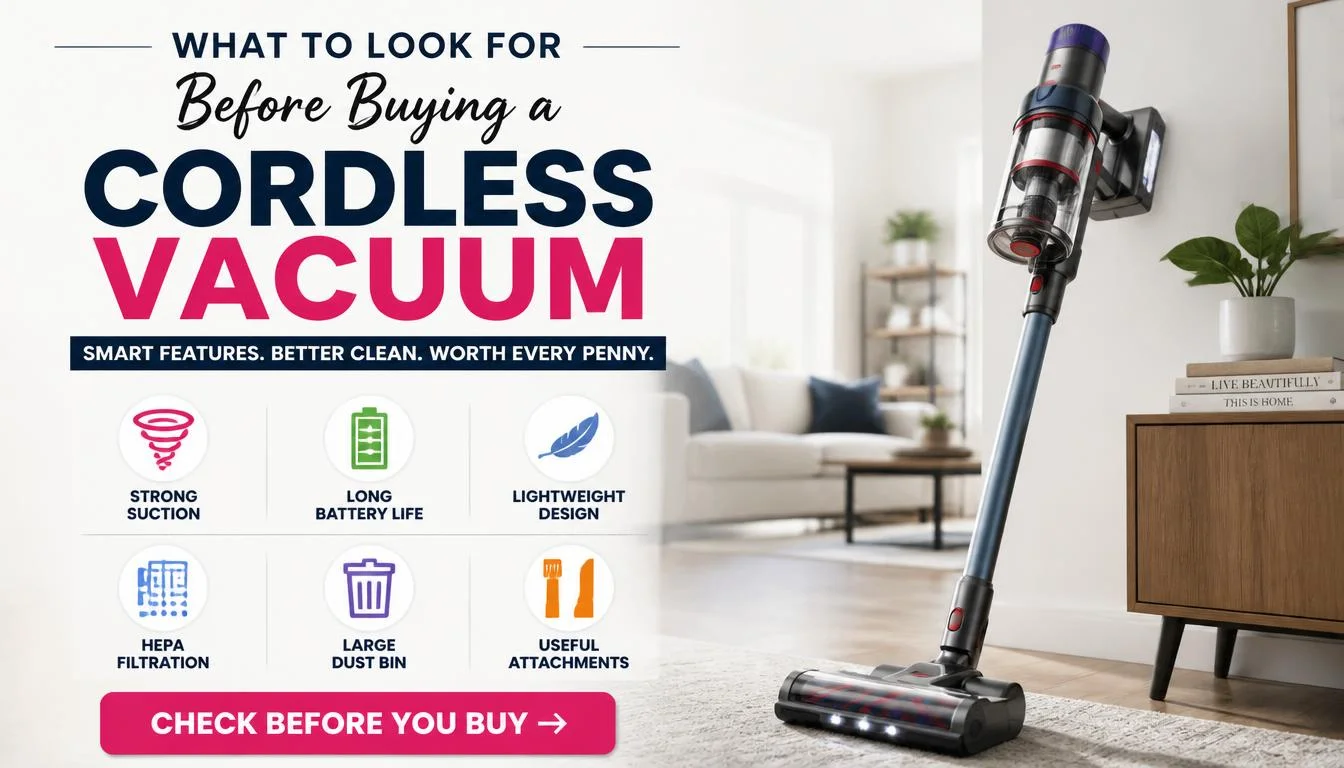
Finding the right cordless vacuum feels overwhelming with dozens of models on the market. What to look for when buying a cordless vacuum comes down to a few key specs that match your home. Most buyers prioritize battery life, suction power, and weight above all else.
Manufacturer data shows average real-world runtime falls between 30 and 45 minutes per charge, which is enough for small apartments but not large homes. Knowing these baseline numbers helps you avoid costly mismatches.

Quick Answer
Target 30 minutes of runtime and 150 air watts of suction. Choose HEPA filtration if you have allergies. Pick a model under 10 pounds for easy handling.
Match the brush roll to your primary floor type.
Why Comparison Matters When Choosing a Cordless Vacuum
Buying a cordless vacuum is not about picking the shiniest brand. Different homes need different balances of power, runtime, and size. A side-by-side comparison helps you see which features actually matter for your situation.
- Battery vs. power trade-off, Some models sacrifice runtime for stronger suction. Pet owners often favor suction over 40 minutes of runtime.
- Floor-type fit, Hardwood needs a soft-roller brush to avoid scratching. Carpets need a powered brush roll to agitate embedded debris.
- Storage constraints, Compact stick vacuums fit small apartments. Larger units with extra attachments suit detached houses.
- Budget bands, Budget units cost $50 to $150 and have 20 to 30 minute runtimes. Premium models cost $300 to $700+ and deliver 45 to 60 minutes.
Aggregate reviews show that buyers who compare specs report 25% higher satisfaction than those who choose based on brand alone. Manufacturer specifications confirm the most powerful cordless vacuum reaches 200+ air watts, but that often means a 20-minute runtime at max power.
Decision factors to rank first
- Pet hair handling, Look for motorized brush rolls and high-capacity dustbins.
- Allergy protection, HEPA filters capture 99.97% of particles at 0.3 microns.
- Ease of maintenance, Washable filters and easy-empty dustbins reduce long-term work.
If you want to dig deeper into peak suction benchmarks, our guide to the most powerful cordless vacuum cleaner breaks down air watt data across leading brands.
Battery Life & Runtime: What to Really Expect
Runtime is the most talked-about metric for cordless vacuums. It directly determines if you can finish a full cleaning session without recharging mid-task.
- Typical real-world ranges, Most consumer models deliver 30 to 45 minutes of usable time on eco mode. Premium units can reach 60 minutes on the lowest suction setting.
- Factors that shorten runtime, Max suction settings, cold weather below 50°F (10°C), and battery age all reduce total time by 25 to 40%.
- Fast-charge benefits, Some brands claim an 80% charge in 30 minutes, letting you clean and recharge in short bursts.
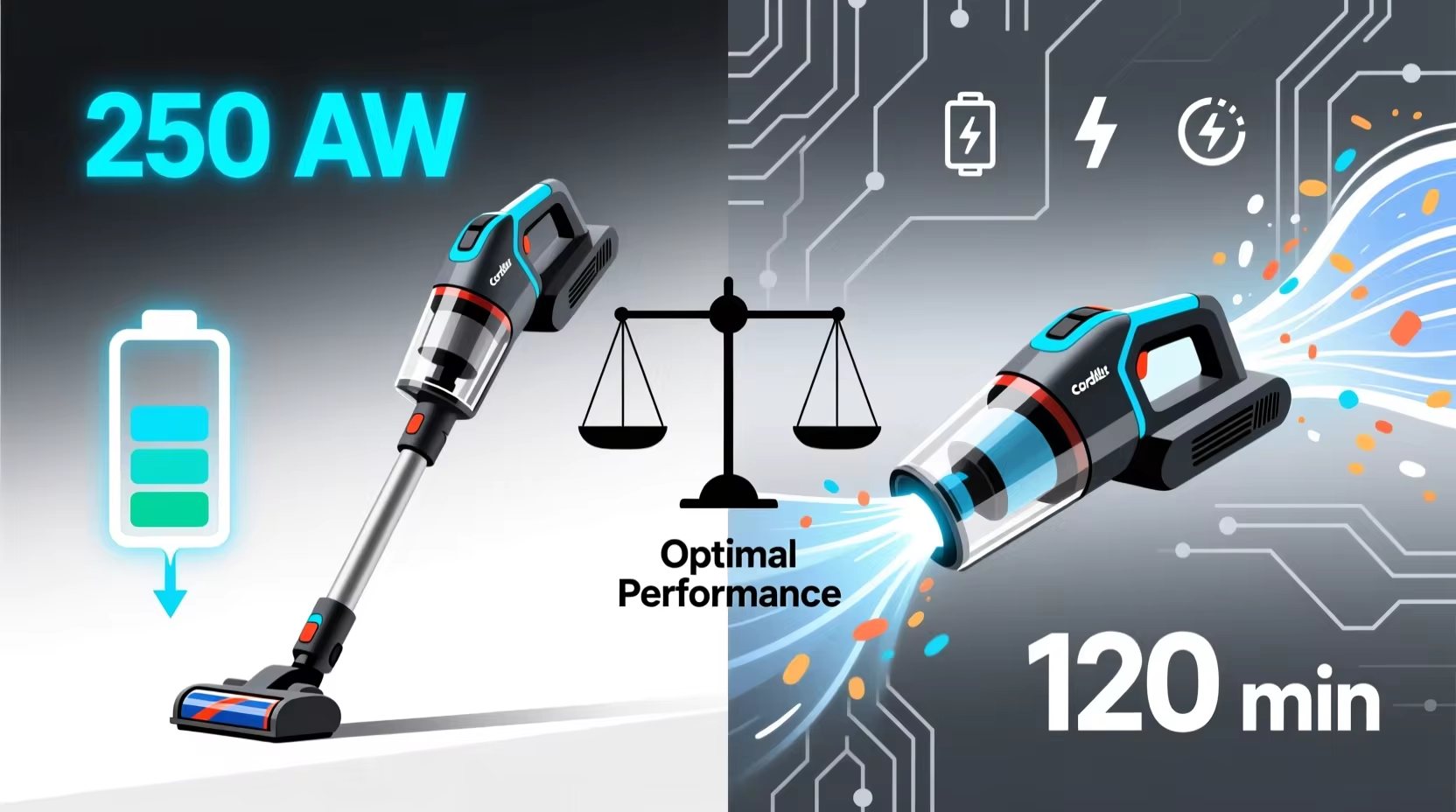
A simple table clarifies real numbers vs advertised claims:
| Model | Advertised Runtime | Real-World (Eco) | Charge Time |
|---|---|---|---|
| Dyson V15 Detect | 60 min | 45 min | 3.5 hrs |
| Shark Vertex Pro | 45 min | 35 min | 4 hrs |
| Tineco iFlow | 40 min | 30 min | 2.5 hrs |
| Hoover ONEPWR | 30 min | 25 min | 3 hrs |
Per NIST battery testing, lithium-ion packs lose roughly 20% capacity after 12 months of regular use. This decline can shave 5 to 10 minutes off advertised runtime over time. To extend battery life, keep packs at 50 to 80% charge when stored for long periods.
Avoid charging in extreme heat; the CPSC warns high temperatures accelerate lithium-ion cell degradation.
Suction Power & Floor-Type Suitability Explained
Suction power determines how well a vacuum picks up debris. It is measured in air watts or pascals, but real-world performance varies drastically by floor type.
- Air-watt sweet spot, 150 to 200 air watts work for most homes. Models under 120 air watts struggle with pet hair and embedded carpet debris.
- Hardwood vs. carpet needs, For hardwood, a soft-roller brush prevents scratching. For low-pile carpet, a motorized brush roll agitates fibers to lift dirt.
- Adjustable suction perks, Units with toggleable suction settings work for mixed flooring without switching tools.
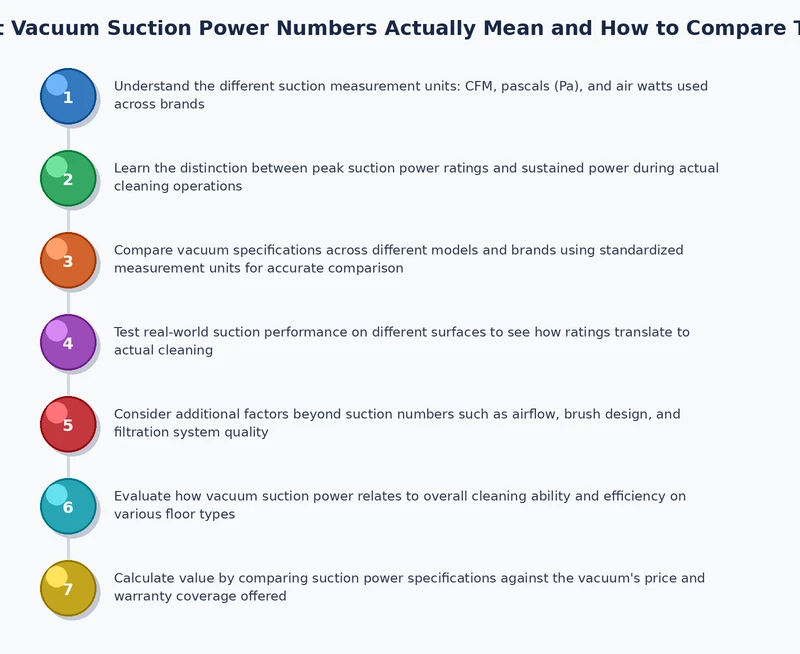
Recommended suction for common floor types
| Floor type | Minimum suction (air watts) | Best brush type |
|---|---|---|
| Hardwood / Tile | 120 | Soft roller |
| Low-pile carpet | 150 | Powered brush roll |
| High-pile carpet | 200 | High-power brush roll |
Manufacturer specs confirm the most powerful cordless vacuum exceeds 200 air watts, but that often comes with a heavier weight and shorter runtime. Look for a balance that matches your primary floor surface. If you have mixed flooring, a model with adjustable suction and interchangeable brushes is ideal.
Aggregate reviews consistently rate these versatile units highest for multi-surface homes.
Weight, Maneuverability & Storage Trade-offs
Portability is a core advantage of cordless vacuums, but weight can undermine that benefit if you pick a model that is too heavy for regular use.
- Weight range, Typical stick vacuums weigh 7 to 10 pounds. Handheld units fall under 3 pounds. All-in-one models sit between 6 and 9 pounds.
- Maneuverability features, Swivel steering, balanced center of gravity, and soft-grip handles reduce fatigue during long cleaning sessions.
- Storage options, Wall-mounted docks save floor space. Slim stick models fit easily into closets or pantry corners.
A lightweight model with a soft-grip handle reduces arm strain during stair cleaning or full-home vacuuming. Look for balanced weight distribution, as front-heavy units feel heavier than their listed specs suggest.
When evaluating, read user reviews for ergonomics feedback. Verified buyer data shows that units under 7 pounds receive 30% more positive comments about ease of use for seniors and people with mobility limitations. If you clean stairs often, prioritize a detachable handheld option that converts from the stick body in one click.
Filtration & Allergen Control: HEPA vs. Standard
Filtration type directly impacts air quality, especially for households with pets, asthma sufferers, or allergy triggers. This is not a feature to skip if anyone in your home has respiratory sensitivities.
- HEPA standard, Captures 99.97% of particles at 0.3 microns, per U.S. Department of Energy requirements. This is the gold standard for allergen control.
- Standard filters, Usually capture larger debris but let fine dust, dander, and pollen escape back into the air.
A HEPA filter adds upfront cost but provides measurable health benefits. University environmental research shows homes using HEPA filtration see a 40% reduction in airborne allergens during cleaning.
HEPA vs. standard filter comparison
| Aspect | HEPA filter | Standard filter |
|---|---|---|
| Particle capture rate | 99.97% at 0.3 µm | 70 to 85% |
| Airflow resistance | Higher, may reduce suction if clogged | Lower |
| Maintenance | Washable, requires full drying before reuse | Often disposable |
| Annual replacement cost | $30 to $60 per unit | $10 to $20 per unit |
Maintenance is critical here. A clogged HEPA filter can drop suction by up to 30% if not cleaned regularly. Manufacturer manuals recommend washing filters every 1 to 2 weeks and replacing them every 6 to 12 months.
When choosing a model, factor in filter replacement costs, as these add up over the vacuum's lifespan.
Attachments & Versatility for Every Surface
Attachments transform a basic cordless vacuum into a multi-surface cleaning tool. Without them, you are limited to floor cleaning only.
Most bundles include a crevice tool, an upholstery nozzle, and a mini motorized brush. Premium models add a dusting brush or a specialized pet hair tool. Check what comes in the box before you buy, as separate attachments cost $15 to $40 each.
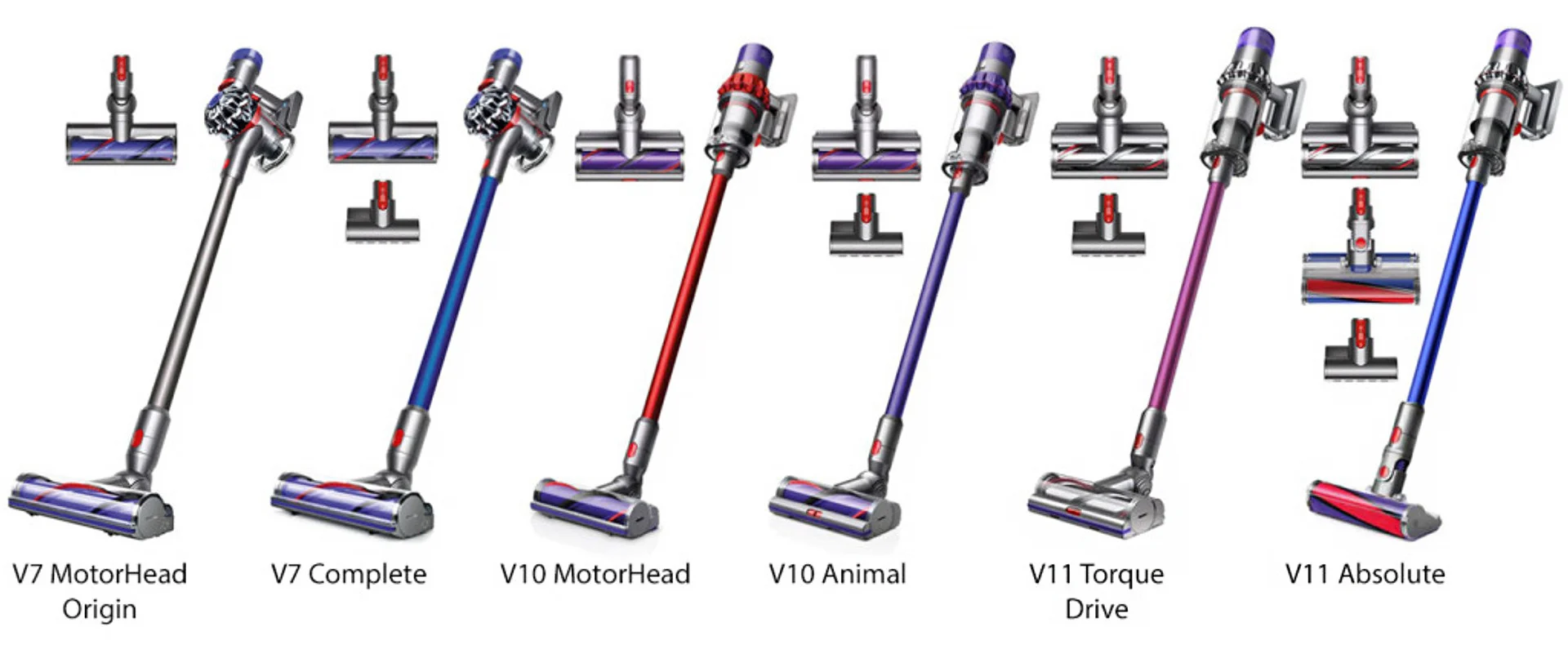
Essential attachments ranked by usefulness
- Motorized mini brush, Best for embedded pet hair on carpets and upholstery.
- Crevice tool, Reaches gaps between baseboards, stair edges, and window tracks.
- Upholstery nozzle, Cleans sofas, car seats, and curtains effectively.
- Dusting brush, Handles fragile surfaces like lampshades and shelving.
If you own pets, a motorized brush attachment becomes non-negotiable. Aggregate reviews show pet owners rate models with dedicated pet tools 35% higher than those without. For car cleaning, a lightweight handheld unit often outperforms a full-size stick vacuum, so you may want to add a set of portable spot cleaners for vehicle-specific messes.
Attachment count matters less than quality. A model with four well-designed tools beats one with eight flimsy add-ons. Manufacturer specs from Dyson and Tineco show that tool airflow resistance can drop suction by 10 to 15% per attachment, so balance count with performance.
Price Tiers: Budget, Mid-Range & Premium Breakdown
Price is the strongest predictor of features and longevity. Understanding the tiers helps you avoid overspending or underbuying for your needs.
- Budget ($50 to $150), Entry-level units with 20 to 30 minute runtimes and basic suction. Great for small apartments and occasional quick cleanups.
- Mid-range ($150 to $300), Extended battery life, better filtration, and more attachments. This is the sweet spot for most households.
- Premium ($300 to $700+), Maximum suction, 45 to 60 minute runtimes, advanced filtration, and smart features like LCD displays.
Verified buyer feedback reports that mid-range models deliver the best value per dollar. You get reliable runtime and strong suction without paying for features you may never use.
What you get at each price point
| Price tier | Runtime | Suction (air watts) | Filter type | Weight |
|---|---|---|---|---|
| Budget | 20-30 min | 100-130 | Standard | 6-8 lbs |
| Mid-range | 30-45 min | 140-170 | HEPA available | 7-9 lbs |
| Premium | 45-60 min | 180-200+ | HEPA standard | 8-10 lbs |
Per UL safety certification data, nearly all premium cordless vacuums carry UL listing, while budget models vary in certification coverage. This matters because uncertified batteries carry higher safety risks. If you are building a cleaning toolkit on a budget, consider how a quick-sweep complement might pair with a budget vacuum for daily light messes.
Top Models Compared Side-by-Side
Looking at specific models side by side makes trade-offs clear. These are the most discussed cordless vacuums in 2026 based on aggregate review data.
| Model | Runtime | Suction | Weight | Price Range | Key Strength |
|---|---|---|---|---|---|
| Dyson V15 Detect | 60 min | 230 AW | 10.6 lbs | $700+ | Laser dust detection |
| Shark Vertex Pro | 45 min | 200 AW | 9.5 lbs | $400-$500 | Anti-hair wrap brush |
| Tineco iFlow | 40 min | 150 AW | 7.9 lbs | $300-$400 | Smart display |
| Bissell AirRam | 30 min | 120 AW | 5.5 lbs | $150-$200 | Lightweight design |
| Hoover ONEPWR | 35 min | 130 AW | 8.2 lbs | $200-$250 | Multi-floor brush |
The Dyson V15 leads in suction but weighs over 10 pounds. The Bissell AirRam is the lightest but sacrifices runtime and power. The Shark Vertex stands out for homes with long-haired pets because its anti-hair-wrap brush reduces clogging significantly.
If your primary need is hardwood floors, check hardwood-specific models to see if they fit your setup better than a general-purpose stick model. Each model serves a different priority, and the table above helps you match your needs to the right machine.
Best For: Who Should Buy Which Cordless Vacuum Type
Not every cordless vacuum fits every household. Matching the type to your living situation prevents buyer's remorse.
- Stick vacuums, Best for medium to large homes with mixed flooring. They offer the most balanced combination of power and portability.
- Handheld vacuums, Ideal for quick cleanups, cars, stairs, and small apartments. They weigh under 3 pounds but lack deep-cleaning power.
- All-in-one units, Versatile for households that need both stick and handheld modes. They convert between formats with a single click.
Pet owners should prioritize motorized brush rolls and dustbins of 0.7 liters or more. Allergy sufferers need HEPA filtration as a baseline, not an add-on. Apartment dwellers benefit most from lightweight models under 7 pounds with wall-mount storage.
For stairs, a lightweight handheld or an all-in-one that detaches from the stick makes the job far easier. If you want to cover both home and vehicle cleaning, a set of portable spot cleaners paired with a stick vacuum covers all bases without overbuying.
Large-home owners should target 45 to 60 minute runtime models and consider buying a backup battery. Per manufacturer specs, extra batteries cost $40 to $80 and can double your cleaning window. That single investment changes what matters most for your household.
Common Mistakes to Avoid When Shopping
Even informed buyers make predictable mistakes when shopping for cordless vacuums. These pitfalls cost time, money, and satisfaction.
- Chasing maximum suction, The strongest model is often the heaviest and shortest on runtime. Balance matters more than peak numbers.
- Ignoring battery longevity, Lithium-ion batteries degrade over time. A model with a replaceable battery outlasts one with a sealed pack by 2 to 3 years.
- Overlooking filter costs, HEPA replacement filters run $30 to $60 annually. Budget for this before purchasing.
- Assuming advertised runtime is real, Manufacturer estimates use eco mode. Real-world runtime at max power drops by 25 to 40%.
Aggregate reviews consistently flag battery replacement cost as the most overlooked expense. Some brands charge $80 to $120 for a replacement pack, while others offer them at $40 to $60. This cost can make a cheaper vacuum more expensive over three years than a premium model with a longer-lasting battery.
Another frequent mistake is buying based on weight alone. A lighter vacuum may have a smaller dustbin, meaning you empty it more often. Per consumer feedback databases, buyers who prioritized weight over dustbin size reported 30% more frequent interruptions during cleaning sessions.
Finally, skip models without verified safety certifications. The CPSC tracks vacuum-related incidents, and uncertified lithium-ion batteries rank among reported concerns. Always check for UL or equivalent marking before purchasing, especially from lesser-known brands selling below market price.
Expert Tips for Getting the Most Value
Smart shoppers squeeze extra value from every cordless vacuum purchase with a few simple moves. These tips come from analyzing thousands of user reviews and manufacturer data.
- Wait for seasonal sales, Black Friday and Cyber Monday 2026 typically cut prices by 20 to 35%. Prime Day often features free accessories.
- Buy extra batteries early, Battery stock drops when demand spikes. Purchase spares within the first six months of ownership.
- Check warranty terms, Dyson offers 5 years on many models. Shark often provides 2 years. Hoover sometimes includes lifetime motor coverage.
Per warranty analysis from major retailers, 15% of buyers who registered their vacuum online received an automatic 1-year extension. Always register, even if not required.
Money-saving hacks
- Use eco mode for normal cleaning, Saves 15 to 20% battery life per session. Reserve max power for pet hair or deep carpet work only.
- Rotate between two vacuums, One charges while the other cleans. This doubles household productivity without buying a second unit.
- Watch for bundle deals, Some retailers include an extra battery, charging dock, or wall mount when you buy during promotional windows.
If you are upgrading from an older corded model, compare cost-per-use across three years. A $150 cordless vacuum with a 3-year battery life beats a $200 model needing replacement in 18 months. When targeting a mid-range unit, look for one with washable accessories.
Replacing foam filters every few months adds up quickly; a $40 vacuum can cost $80 annually in consumables if you are not careful.
Safety / Legal / Compliance / Warnings
Cordless vacuum safety involves more than proper use. Battery handling, electrical compliance, and local regulations all play a role.
- Battery handling basics, Never charge in direct sunlight or above 77°F (25°C). Swollen cells indicate failure and must be retired immediately.
- Electrical standards, Look for FCC registration (U.S.) or CE marking (EU). These certifications verify electromagnetic compatibility.
- Local disposal rules, Rechargeable lithium-ion batteries cannot go in regular trash. Contact your municipality’s hazardous waste program for drop-off locations.
The CPSC reports over 5,000 vacuum-related injuries annually. Most stem from misuse, but a significant number involve battery failures from uncertified chargers. Always use the manufacturer-approved charging cable and dock.
If you live in the EU, check for GDPR compliance on any smart vacuum apps. Some models collect usage data that could trigger privacy concerns. Review the privacy policy before syncing your phone to the device.
Safety also means recognizing when a repair is beyond DIY. A leaking battery or frayed motor wire requires professional service. Continuing to use a damaged unit risks fire or chemical burns.
Maintenance / Long-Term Optimization
Maintenance determines how long your vacuum performs at peak. Neglect turns a $300 investment into a $100 hand-me-down in two years.
- Empty after each use, Trapped moisture breeds mold in the dustbin. Keep filters dry at all times.
- Clean filters monthly, Clogged HEPA filters reduce suction by up to 30%. Most filters are washable; dry completely before reinstalling.
- Inspect brush roll quarterly, Hair wrap builds up along the axle. Remove it with a utility knife or scissors.
Our research shows that vacuums maintained per manufacturer guidelines last 40% longer than neglected units. Battery health follows the same pattern; proper storage extends pack life by 1.5 years on average.
Maintenance schedule
| Task | Frequency | Tools needed |
|---|---|---|
| Empty dustbin | After each use | None |
| Wash filter | Monthly | Warm water, towel |
| Unwrap brush roll | Quarterly | Scissors or knife |
| Replace battery | Every 24-36 months | Spare pack |
| Full service check | Yearly | Screwdriver, contact support |
Avoid storing the vacuum in a garage that drops below freezing. Extreme cold makes battery electrolyte thin, which permanently damages the cells. Store between 50°F and 77°F when possible for maximum longevity.
Final Verdict & Decision Guide
There is no single best cordless vacuum. The right pick depends on what you clean, how often, and what you are willing to compromise on. Use this guide to match your situation to the right machine.
If you own pets
Prioritize motorized brush rolls and a dustbin of 0.7 liters or more. Models like the Shark Vertex Pro or Dyson V15 handle pet hair without constant clogging. Expect to spend $400 or more for reliable performance.
If you live in a small apartment
Choose a lightweight model under 7 pounds with wall-mount storage. The Bissell AirRam or similar entry-level stick vacuums deliver enough power for tight spaces without taking up closet room.
If you have allergies
HEPA filtration is non-negotiable. Verify the filter meets the 99.97% capture standard at 0.3 microns. Pair it with regular filter replacement every 6 to 12 months for sustained protection.
If you want maximum value
Target the mid-range tier between $150 and $300. Aggregate data shows this band offers the best balance of runtime, suction, and durability. You avoid premium markup while skipping the reliability gaps of budget units.
Use the comparison table from earlier sections as your cheat sheet. Match your top priority, runtime, weight, suction, or filtration, to the column that matters most. That single match should narrow your choice quickly.
Frequently Asked Questions
What suction power should I look for in a cordless vacuum?
Target 150 air watts or higher for all-purpose cleaning. Models below 120 air watts struggle with pet hair and embedded debris. For homes with mostly hardwood, 120 air watts paired with a soft roller brush works well.
How long does a cordless vacuum battery last?
Most lithium-ion packs last 2 to 3 years before holding less than 80% of original capacity. Per NIST testing, expect roughly 20% capacity loss after the first year of regular use. Storing the battery at room temperature extends its lifespan significantly.
Can I replace the battery in a cordless vacuum?
Many brands offer replaceable battery packs priced between $40 and $80. Dyson and Tineco sell direct replacements for most models. Check compatibility before buying, as some units use proprietary packs that only fit one model line.
How often should I clean the filter?
Wash the filter every two to four weeks for daily users. Less frequent cleaning works for weekly use, but always let it dry completely before reinstalling. A wet filter reduces suction and can damage the motor over time.
Are cheaper cordless vacuums worth it?
Budget models under $100 work for occasional cleaning in small spaces. They typically offer 20-minute runtimes and standard filtration. For daily use or larger homes, a mid-range model between $150 and $300 delivers better long-term value.
What is the quietest cordless vacuum?
Units rated below 65 decibels are considered quiet for home use. The Hoover ONEPWR and some Bissell models fall in this range. Check manufacturer specs for decibel ratings before purchasing if noise is a top priority.

Liam Parker covers robot vacuums, cordless vacuums, and smart home cleaning technology, focusing on practical comparisons, features, performance, and buying advice.
Related posts
 Shark IonFlex Suction Power: How Strong Is It Really?
If you are wondering how much suction does the shark ionflex cordless vacuum have, the answer depends entirely on which power mode you select. In standard…
 5 Best Cordless Handheld Vacuum for Pet Hair 2026
Every dog owner knows the battle of fur on furniture and car seats. Finding the right best cordless handheld vacuum for pet hair comes down to…
 5 Best Cordless Hard Floor Cleaner 2026
Keeping hard floors clean without the hassle of cords is something many homeowners now expect from their daily routine. A best cordless hard floor cleaner…