
The Cordless Vacuum Conundrum: What to Look for in 2026
Gone are the days of wrestling with a heavy, corded vacuum cleaner, tripping over plugs and limited by the length of an electrical cord. The cordless vacuum has revolutionized home cleaning, offering unprecedented freedom and convenience. But with a dizzying array of models boasting various specs, features, and price points, choosing the right one can feel more overwhelming than the dust bunnies under your sofa. This guide will cut through the marketing noise and help you identify the perfect cordless vacuum for your unique home and lifestyle.
Understanding what truly matters in a cordless vacuum is crucial because it's a significant investment in your daily comfort and home maintenance. A poor choice can lead to frustration, inadequate cleaning, and wasted money. By the end of this article, you will be equipped with the knowledge to evaluate key factors like battery life and suction power, differentiate between essential features and gimmicks, and make an informed decision that leaves your floors spotless and your cleaning routine simplified.
Power and Performance: Beyond the Marketing Hype
The most critical aspect of any vacuum is its cleaning ability, often summarized as "suction power." In cordless vacuums, this is typically measured in Air Watts (AW) or Pascals (Pa). While manufacturers love to tout peak suction numbers, the more important figure is the sustained suction power. A vacuum might have a high peak for a few seconds, but if it drops dramatically as the battery drains or the filter gets dirty, its real-world performance suffers. In 2026, look for models that provide consistent, high suction across the entire battery cycle, with 150 AW and above being a strong benchmark for versatile home cleaning.
Suction is useless if the vacuum doesn't effectively channel dirt into its bin. This is where the entire airpath system comes into play. Examine the design of the brush roll, the seals around the bin, and the filtration system. A well-sealed system prevents suction loss. For homes with a mix of flooring, a motorized brush roll is non-negotiable for carpets, as it agitates fibers to pull out embedded dirt and pet hair. Many modern vacuums offer an automatic mode that adjusts suction based on floor type, which is a smart feature for optimizing battery life without sacrificing clean results on high-pile rugs.
Practical performance also hinges on the vacuum's ability to handle different debris types. Can it pick up large cereal pieces as well as fine flour? Does the brush roll tangle with long hair, requiring frequent maintenance? Look for models with anti-tangle technology, often featuring a brush roll with grooves or a specialized design that channels hair to the ends for easy removal. Before purchasing, read reviews that specifically test these scenarios. A vacuum that excels on pet hair but chokes on sand might not be suitable for a beachside apartment or a home with a sandbox nearby.
Battery and Runtime: The Heart of Cordless Freedom
Battery technology is the linchpin of the cordless vacuum experience. The two key metrics are runtime and recharge time. Runtime, often given in minutes, is highly dependent on the power mode used. A vacuum may offer 60 minutes in eco mode but only 10 minutes on max suction. Your buying decision should be based on the runtime in a mode you'll actually use for the majority of your cleaning. For a typical 2-3 bedroom apartment, a consistent 30-40 minutes of strong suction is usually sufficient. For larger homes, consider models with removable, swappable batteries.
The type of battery cell matters. Most premium vacuums now use lithium-ion cells, but the quality and configuration can vary. Higher-quality cells maintain voltage better, leading to more consistent power output. Recharge time is equally important; a vacuum that takes 6 hours to charge for 20 minutes of use can be impractical. Look for fast-charging capabilities, with many 2026 models reaching full charge in 2-3 hours. Some even offer a quick-charge function that provides 10-15 minutes of runtime from just a short plug-in, perfect for quick clean-ups.
To maximize your vacuum's battery lifespan, adopt good charging habits. Avoid constantly draining the battery to zero; partial discharges are better for long-term health. If you have a model with a removable battery, store it in a cool, dry place. Many modern vacuums feature intelligent battery management systems that prevent overcharging. When comparing models, also consider the placement of the battery. A well-balanced vacuum with a battery pack positioned low on the handle will feel lighter and reduce wrist strain, making longer cleaning sessions less fatiguing.
Form, Function, and Filtration
Bin Capacity and Emptying Hygiene
Dustbin capacity determines how often you'll need to stop cleaning to empty the container. For smaller homes or daily quick cleans, a 0.4-0.5 liter bin may suffice. For larger homes or homes with pets, seek out bins of 0.6 liters or more. However, a larger bin can add weight and bulk. The more critical innovation in recent years has been in the emptying mechanism itself. The dreaded "cloud of dust" released when emptying a vacuum is a major pain point that manufacturers have been racing to solve.
The gold standard in 2026 is the hands-free, hygienic emptying system. Many top-tier models now dock over your trash can; a lever triggers a mechanism that ejects the dirt directly into the bin, minimizing contact and dust plumes. Some even feature sealed bags or compartments that fully contain the debris. If a fully automated system isn't in your budget, look for bins with easy-release levers and wide openings that make manual emptying less messy. Transparent bins are also helpful, allowing you to see when it's full without guesswork.
Practical advice is to consider your sensitivity to dust and allergens. If you have severe allergies, a vacuum with a sealed, hygienic empty system is worth the investment. For general use, prioritize ease: can you empty the bin with one hand? Does it require you to touch dirty components? After any emptying, it’s good practice to occasionally check and clean the bin's interior, the pre-motor filter, and the cyclone components (if applicable) with a dry cloth to maintain peak suction and prevent odors from developing over time.
Smart Features, Ecosystem, and Value
The cordless vacuum market is increasingly integrating smart technology. This can range from useful to gimmicky. Useful smart features include digital displays that show remaining runtime in real-time, battery charge percentage, maintenance reminders (like "clean filter" alerts), and blockage warnings. Some vacuums even connect to smartphone apps, allowing you to track cleaning history, order replacement parts, or access troubleshooting guides. These features can enhance the user experience but should not come at a significant premium if core performance is lacking.
Consider the brand's ecosystem. If you already own other tools from a brand that uses the same battery platform (like power tools), it may be economical to choose their vacuum that shares those batteries. This interchangeability can be a huge cost saver and convenience. Also, research the brand's reputation for customer service and part availability. How easy is it to purchase replacement batteries, filters, or brush rolls two or three years from now? A vacuum from a company with a strong support network is a more durable investment.
Finally, assess the total value. The most expensive model isn't always the best for your needs. Create a checklist of your non-negotiables (e.g., strong carpet performance, pet hair tools, 30+ minute runtime) and your nice-to-haves (e.g., hygienic empty, digital display). Read professional and user reviews that focus on long-term reliability. Often, a mid-range model from a reputable brand will offer 90% of the performance of the flagship at a much lower price, representing the best overall value for most consumers.
Key Takeaways
- ✓ Prioritize sustained suction power (Air Watts) and a sealed airpath with a motorized brush roll for effective cleaning on all surfaces.
- ✓ Evaluate battery runtime based on your home's size and prioritize models with swappable batteries for larger areas to avoid mid-clean interruptions.
- ✓ Choose an ergonomic, well-balanced vacuum with a full suite of attachments and a true, sealed HEPA filtration system for health and versatility.
- ✓ Opt for a vacuum with a hygienic, hands-free emptying system or at least a easy-to-empty bin to maintain cleanliness and convenience.
- ✓ Focus on core performance and ecosystem compatibility over flashy smart features, and assess total long-term value including part availability and support.
Frequently Asked Questions
How long should a cordless vacuum battery last before needing replacement?
With proper care, a lithium-ion battery in a cordless vacuum should retain good capacity for 3-5 years. Proper care means avoiding complete discharges, not storing it in extreme temperatures, and using the correct charger. Many brands sell replacement batteries, so the vacuum's lifespan can extend well beyond the first battery's degradation.
Can a cordless vacuum truly replace an upright or canister vacuum?
For most daily cleaning and maintenance, yes, a high-quality cordless vacuum is a full replacement. Its convenience encourages more frequent cleaning. However, for deep, whole-house cleaning sessions on large areas of thick carpet, a powerful corded vacuum may still have an edge in sustained deep-cleaning power. Many households find the cordless is used for 90% of tasks.
Is a more expensive cordless vacuum always better?
Not necessarily. While premium models often offer better build quality, stronger suction, and more convenient features like hygienic emptying, there are excellent mid-range vacuums. The key is to match the vacuum's strengths to your primary needs. A $300 vacuum that perfectly suits a small apartment with hard floors can be a better purchase than an $800 flagship designed for a large, carpeted home with pets.
How important is the warranty, and what should I look for?
A warranty is very important as it indicates the manufacturer's confidence in their product. Look for at least a 2-year warranty. Pay close attention to what is covered: the motor, the battery, and other parts. Some brands offer longer warranties on the motor (e.g., 5 years) but only 6 months on the battery. A comprehensive warranty is a sign of a quality product.
How do I maintain my cordless vacuum to ensure it lasts?
Regular maintenance is simple but crucial. Empty the bin after each use or before it gets completely full. Regularly clean the filter (often washable) as per instructions—usually every 1-3 months. Check the brush roll for hair and debris tangles and cut them free monthly. Wipe down sensors and charging contacts. Store it on its provided wall dock to keep it charged and ready.
Conclusion
Choosing the right cordless vacuum in 2026 requires a balanced assessment of power, endurance, design, and smart value. By focusing on sustained suction and a robust airpath system, you ensure cleaning efficacy. Prioritizing battery logic and ergonomics guarantees the vacuum is a joy, not a chore, to use. Innovations in hygienic emptying and advanced filtration add layers of convenience and health benefits that modern homes have come to appreciate. Ultimately, the best vacuum is the one whose features align with your specific living space, cleaning challenges, and budget.
Armed with this knowledge, your next step is to apply these criteria as you research models. Watch detailed video reviews, read owner feedback on long-term reliability, and if possible, try holding a few models in a store to assess their weight and balance. Investing this time upfront will lead you to a cordless vacuum that doesn't just promise freedom from the cord, but truly delivers a cleaner, simpler, and more efficient home cleaning routine for years to come.

Liam Parker covers robot vacuums, cordless vacuums, and smart home cleaning technology, focusing on practical comparisons, features, performance, and buying advice.
Related posts
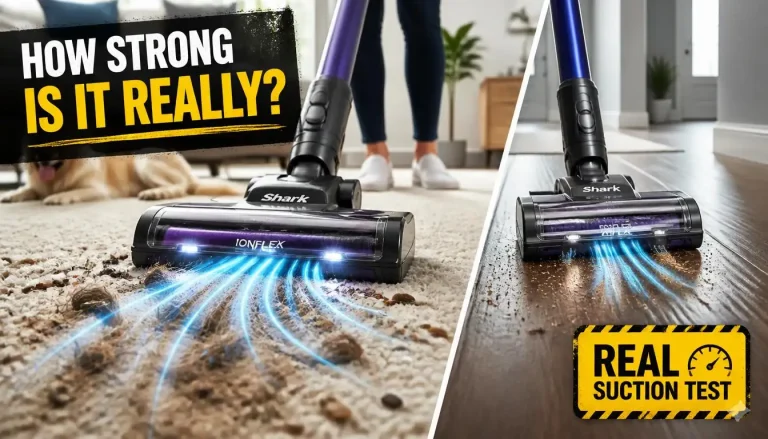 Shark IonFlex Suction Power: How Strong Is It Really?
If you are wondering how much suction does the shark ionflex cordless vacuum have, the answer depends entirely on which power mode you select. In standard…
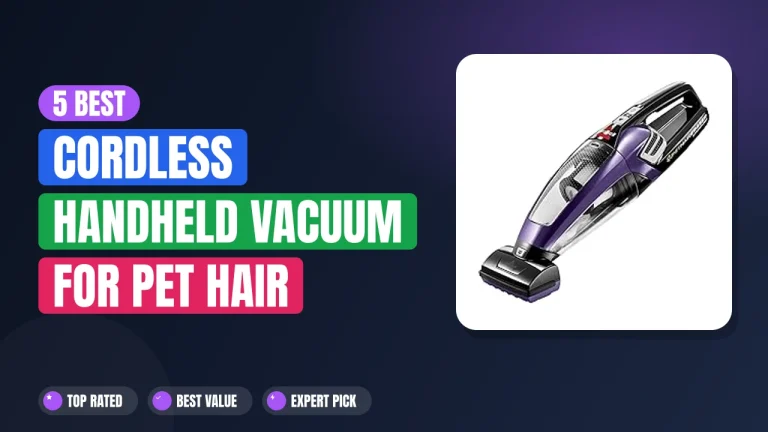 5 Best Cordless Handheld Vacuum for Pet Hair 2026
Every dog owner knows the battle of fur on furniture and car seats. Finding the right best cordless handheld vacuum for pet hair comes down to…
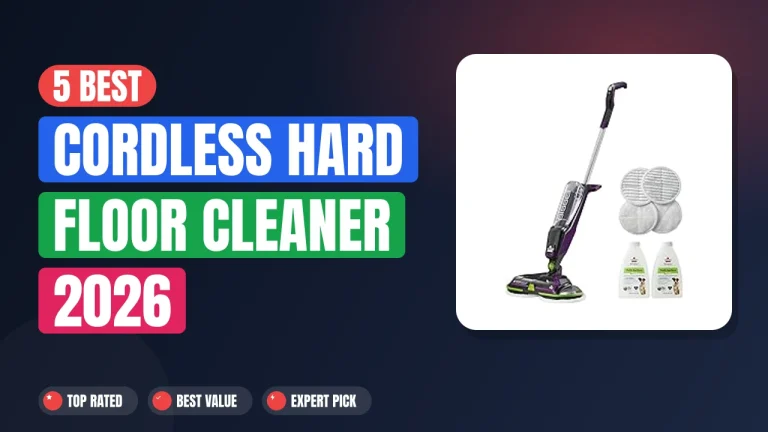 5 Best Cordless Hard Floor Cleaner 2026
Keeping hard floors clean without the hassle of cords is something many homeowners now expect from their daily routine. A best cordless hard floor cleaner…