
The Ultimate Cordless Vacuum Guide 2026: How to Cut Through the Hype and Find Your Perfect Match
You are staring at a wall of nearly identical-looking stick vacuums online, each promising unparalleled suction, revolutionary battery life, and a home free of dust and pet hair. The choice is paralyzing, and the fear of buying a dud that dies mid-cleaning or can't handle your plush carpet is real. The quest for the best cordless vacuum is not about finding a single, mythical "best" model, but about identifying the perfect tool for your specific home, lifestyle, and cleaning challenges.
This topic matters because a cordless vacuum is a significant investment in your daily comfort and time. A well-chosen model can transform cleaning from a dreaded chore into a quick, efficient task, while a poor choice becomes an expensive closet ornament. This guide will move beyond marketing buzzwords to give you a clear framework for decision-making. You will learn how to decode technical specifications, match vacuum features to your home's flooring, understand the real-world trade-offs of battery technology, and ultimately select a machine that feels like it was designed just for you.
Beyond Suction: The Five Critical Performance Pillars
While manufacturers love to tout "powerful suction," it's only one part of the performance equation. To truly evaluate a cordless vacuum, you must consider five interconnected pillars. First is Suction Power and Airflow, often measured in Air Watts (AW) or Pascal (Pa). Higher numbers generally indicate stronger suction, but this power must be sustained, not just a peak burst. Look for models that maintain strong airflow even as the dustbin fills, which is a sign of a well-sealed system. For example, a vacuum with 150 AW that maintains 140 AW under load is often better than one boasting 200 AW that drops to 100 AW quickly.
The second pillar is Filtration. A vacuum that spews fine dust and allergens back into the air defeats its purpose. The gold standard is a fully sealed HEPA filtration system, which traps 99.97% of particles as small as 0.3 microns. This is non-negotiable for allergy or asthma sufferers. Third is Brushroll Design and Agility. A single brushroll struggles to transition from hard floors to high-pile rugs. Advanced models feature auto-adjusting brushrolls that lower and raise, or even dual brushrolls—one for debris and a softer one for hard floors. The brushroll should also be easily removable for cleaning tangled hair, a major pain point.
The final two pillars are Maneuverability and Dustbin Capacity & Emptying. A vacuum should feel like an extension of your arm, swiveling easily under furniture. Low-profile designs are crucial for cleaning under beds and sofas. As for the dustbin, capacity dictates how often you'll need to empty it. More importantly, look for a hygienic, hands-free emptying mechanism—often called a "dirt ejector"—that minimizes your contact with dust and debris, a feature that has become standard on premium models.
Battery Life and Ecosystem: The Heart of Cordless Convenience
The promise of cordless freedom hinges entirely on the battery. The stated "up to 60 minutes" runtime is almost always achieved on the lowest power setting, with a clean filter, on a hard floor. Real-world runtime on mixed surfaces with auto or boost mode is often 15-25 minutes. Therefore, consider your home's square footage. A 700 sq. ft. apartment can be easily handled by a single battery, while a 2,500 sq. ft. home may require a model that includes a spare battery or has a rapid charge capability. In 2026, fast-charging technology that delivers a 50% charge in 15-20 minutes is becoming common.
Beyond the battery itself, consider the vacuum's ecosystem. Many leading brands now operate within a wall-mounted docking station that serves as both a charger and a storage unit for all accessories. This keeps the vacuum ready to go and organized. Furthermore, the true value of a brand like Dyson, Tineco, or Shark often lies in its compatible toolset. A motorized pet tool, a crevice tool, a soft dusting brush, and a mini motorized brush for upholstery transform the stick vacuum into a whole-home cleaning system. Assess which tools you'll genuinely use.
Practical tip: Pay close attention to the battery's placement. A vacuum with the battery pack positioned low, near the floor head, often has better balance and feels less top-heavy than models with the battery in the handle. This makes a significant difference in fatigue during extended cleaning sessions. Also, check if the battery is user-replaceable; a vacuum is only as good as its battery, and being able to purchase a new one in a few years extends the machine's lifespan dramatically.
Flooring Matchmaker: Choosing the Right Vacuum for Your Surfaces
Your home's flooring composition is the single biggest factor in narrowing your choice. For homes dominated by hard surfaces (hardwood, tile, laminate), you need a vacuum that won't scatter debris or scratch floors. Look for a soft roller brush or a dedicated hard floor mode that reduces suction to prevent "sticktion" and a brushroll that can be turned off entirely. The Samsungs and LG's of the world often excel here with their fluffy roller designs that capture both large debris and fine dust in one pass.
For carpeted homes, especially with medium to high-pile carpet, suction power and brushroll agitation are king. You need a motorized brushroll with stiff bristles (often a combination of nylon and carbon fiber) to dig into the pile and lift dirt. The auto-adjust feature mentioned earlier is critical here. Brands like Dyson and Shark have invested heavily in carpet-deep-cleaning technology. If you have a mix, prioritize a vacuum with a proven, automatic transition system; you don't want to stop and manually change settings every time you move from your rug to your kitchen.
Homes with pets present a special challenge. Pet hair wraps around brushrolls and clogs vacuums with astonishing speed. The solution is a vacuum designed with anti-tangle technology. This can be a brushroll with no central bristle strip (like Dyson's hair screw system), a comb-like design that strips hair off the roll as it spins, or an easily removable brushroll for quick cleaning. A motorized pet tool is also invaluable for furniture and stairs. In 2026, many mid-range models now include effective anti-tangle features that were once exclusive to the premium tier.
The Price Spectrum: From Budget Bargains to Premium Powerhouses
Cordless vacuums now span a wide price range, each with a different value proposition. In the Budget Tier (Under $250), you'll find capable machines from brands like Eufy, Wyze, and certain Shark models. They offer decent suction for small spaces and mostly hard floors. The trade-offs are typically shorter battery life (often with no spare), less sophisticated filtration, plastic construction that may feel less durable, and fewer specialized tools. They are excellent "starter" cordless vacuums or for secondary spaces like apartments or RVs.
The Mid-Range Tier ($250 – $500) is the most competitive and popular segment. Here, you find the core models from Dyson (like the V series), Shark's Vertex and Stratos lines, Tineco, and Samsung Jet. This tier delivers robust performance, good battery systems (often with a spare), HEPA filtration, a full suite of tools, and durable build quality. Most homes will find their ideal match here, balancing performance, features, and price. The differences often come down to brand-specific innovations in brushroll design or user interface.
The Premium Tier ($500+) includes flagship models like the Dyson Gen5detect, LG CordZero A9 Kompressor, and high-end Miele. You are paying for cutting-edge technology: laser dust detection that illuminates microscopic particles, compressed dustbins that increase capacity, the absolute longest and most consistent battery systems, and superior build materials. For large, multi-surface homes or tech enthusiasts who value the latest innovations, this tier delivers a noticeable, albeit expensive, step up in the cleaning experience and convenience.
The Hands-On Test: What to Do Before You Commit
Armed with research, the final step is a virtual or in-person "test drive." First, watch in-depth video reviews from trusted sources that show the vacuum in action on different floor types, emptying the bin, and cleaning hair. Pay attention to the noise level and the reviewer's comments on balance and weight. Second, read owner reviews on retail sites, but be savvy. Look for patterns in complaints (e.g., "battery died after a year," "hair constantly tangles") rather than isolated rants. Consistent praise is also a strong signal.
Finally, understand the warranty and support. A standard warranty is one year, but some brands offer 2-5 years, especially on the motor and battery. Check the brand's reputation for customer service. Is it easy to order replacement parts like filters, batteries, or brushrolls? A vacuum is a tool that will need maintenance. Before clicking "buy," ensure you are comfortable with the long-term ownership costs and support structure. A slightly more expensive vacuum from a company with excellent parts availability can be cheaper over five years than a bargain model that becomes unusable when a $20 part breaks.
Wrapping up this section, remember that the "best" vacuum is the one you will use consistently. If a vacuum is too heavy, too cumbersome to empty, or dies before you finish, it will gather dust. Prioritize the combination of runtime, ease of use, and features that directly solve your biggest cleaning headaches. The goal is not to win a spec sheet battle, but to make your life easier.
Key Takeaways
- ✓ There is no single "best" cordless vacuum; the ideal model is determined by your specific flooring, home size, and primary cleaning needs (e.g., pets).
- ✓ Evaluate vacuums on five pillars: sustained suction & airflow, high-quality filtration (HEPA), intelligent brushroll design, maneuverability, and hygienic dustbin emptying.
- ✓ Real-world battery runtime is often half the marketed maximum; for larger homes, prioritize models with spare batteries or very fast charging.
- ✓ Anti-tangle brushroll technology is essential for pet owners, and auto-adjusting brushrolls are crucial for homes with a mix of carpets and hard floors.
- ✓ Your budget dictates trade-offs: budget models work for small spaces, the competitive mid-range suits most homes, and the premium tier offers cutting-edge tech for large homes.
Frequently Asked Questions
Is a cordless vacuum powerful enough to replace my corded upright?
For most daily and weekly cleaning tasks, yes, modern cordless vacuums are remarkably powerful. They excel at quick clean-ups and maintaining cleanliness. However, for deep-cleaning entire homes of thick carpeting, a high-end corded upright or canister may still have an edge in sustained maximum power and may not require battery management. For the majority of households with mixed flooring, a good cordless vacuum is a sufficient primary vacuum.
How long do cordless vacuum batteries typically last before needing replacement?
The battery itself, as a consumable component, may see reduced capacity after 2-4 years of regular use. Most are lithium-ion. The overall vacuum's lifespan can be 5-8 years with proper care. Many factors affect this: charging habits (avoid constantly draining to 0%), frequency of use, and heat exposure. Choosing a brand that sells user-replaceable batteries is key to extending the total life of your investment.
Are bagless cordless vacuums hygienic to empty?
This has been a major area of innovation. While early bagless models were messy, most now feature "dirt ejector" mechanisms that, with a pull of a lever, push the compressed dust and debris directly into your trash with minimal airflow back into your face. For maximum hygiene, some brands like LG have bins that self-clean, and you can also empty the bin outside or over a toilet. They are far more hygienic than they used to be.
Can cordless vacuums handle large debris like cereal or broken glass?
Yes, but with caveats. They are excellent at picking up large, dry debris. However, their dustbins are small, so a large spill will fill it instantly, requiring you to stop and empty it. For broken glass, use caution: while the vacuum will pick it up, it could scratch the plastic cyclone internals or, more worryingly, pierce the filter if it's not a contained HEPA bag. For large amounts of broken glass, a broom and dustpan are still safer first.
What's the most overlooked feature when buying a cordless vacuum?
Balance and center of gravity. A vacuum can have incredible specs, but if it's top-heavy and strains your wrist when using it above the floor (on stairs, under tables, or for ceiling corners), you will dread using it. Look for designs where the weight is centered low, near the floor head. If possible, try holding a display model in a store to feel its balance in an upright and in-use position.
Conclusion
Choosing the best cordless vacuum in 2026 is a deliberate process of aligning technology with your personal reality. By moving beyond marketing claims to evaluate the five pillars of performance, understanding the realities of battery life, honestly assessing your flooring and pet situation, and selecting a model within a budget that offers the right long-term value, you can make a confident decision. The market offers exceptional options at every price point, each designed to solve specific cleaning challenges.
Take the next step by identifying your non-negotiable needs—perhaps it's a HEPA filter for allergies, an anti-tangle brush for your shedding dog, or simply a 30-minute real-world runtime for your spacious home. Use this framework to narrow your search to two or three finalists. Then, seek out hands-on video reviews and owner feedback on those specific models. Your perfect cleaning partner is out there, ready to turn a chore into a quick, satisfying task and give you back precious minutes in your day.

Liam Parker covers robot vacuums, cordless vacuums, and smart home cleaning technology, focusing on practical comparisons, features, performance, and buying advice.
Related posts
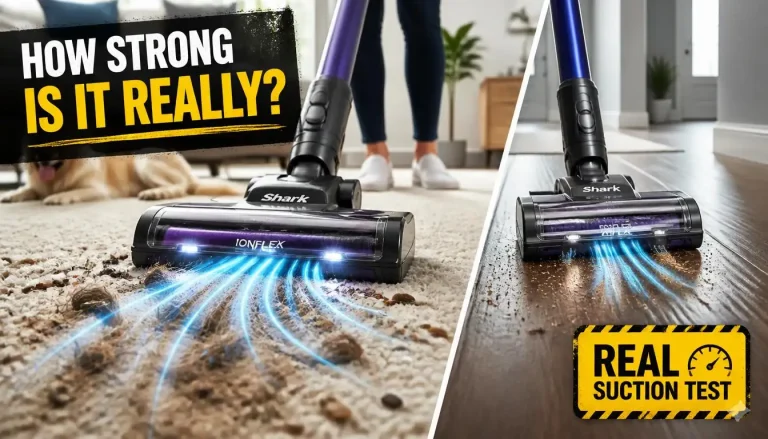 Shark IonFlex Suction Power: How Strong Is It Really?
If you are wondering how much suction does the shark ionflex cordless vacuum have, the answer depends entirely on which power mode you select. In standard…
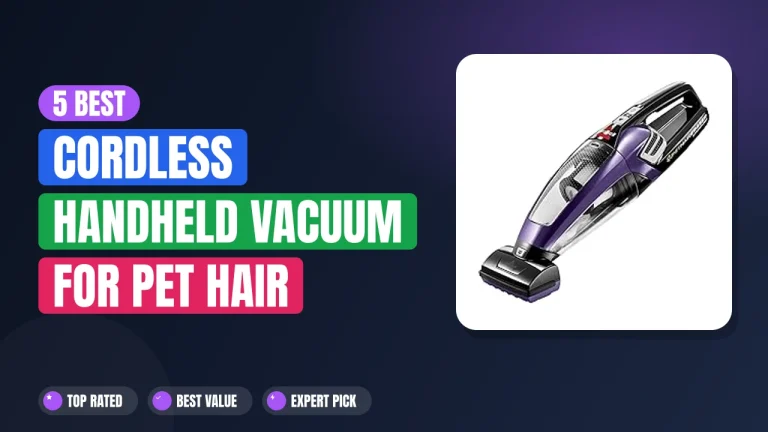 5 Best Cordless Handheld Vacuum for Pet Hair 2026
Every dog owner knows the battle of fur on furniture and car seats. Finding the right best cordless handheld vacuum for pet hair comes down to…
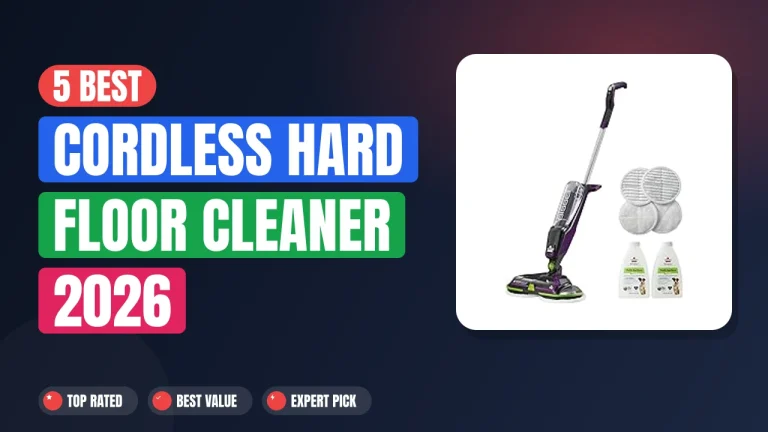 5 Best Cordless Hard Floor Cleaner 2026
Keeping hard floors clean without the hassle of cords is something many homeowners now expect from their daily routine. A best cordless hard floor cleaner…